
You’re here because you realized guessing how well you slept based on how much coffee you need isn’t a sustainable strategy. The wearable market is flooded with devices claiming to optimize your rest, but there’s a massive difference between a watch that randomly buzzes at 3 AM and a calibrated sensor that actually maps your circadian rhythm.
Forget the rumor mill about unreleased bands—I’m breaking down the actual hardware you can buy right now. Whether you want an invisible ring that measures 20 biometrics or a dedicated wristband that survives a month on a single charge, here is exactly what it’s like to live with the top sleep and recovery trackers on the market.
Top Picks
Here are the 7 best sleep and digital wellness trackers based on daily comfort, sensor accuracy, and actual battery endurance.


Oura Ring Gen3 Heritage Smart Ring
The Oura Ring Gen3 dominates sleep tracking because your finger provides a significantly more accurate pulse reading than your wrist. It pulls over 20 specific biometrics overnight, delivering clinical-grade data without strapping a glowing, distracting screen to your arm while you try to rest.
Tracks 20+ biometrics including heart rate, activity, and stress. Compatible with iOS/Android and over 40 apps like Apple Health and Strava. HSA/FSA eligible. Requires $5.99/mo Oura Membership after the first month.
Sleeping with it is frictionless once you get the right fit. However, you absolutely must use the Gen3 sizing kit first—which differs from Gen4—making the actual purchasing process a frustrating, delayed two-step ordeal before you ever wear the real ring.
Verdict
Best Overall for Dedicated Sleep Tracking. Buy this if you want unobtrusive, research-grade nighttime biometric tracking without wearing a bulky screen to bed.
Garmin Venu 3 AMOLED Touchscreen Smart Watch
Garmin’s Venu 3 straddles the line between a hardcore fitness tracker and a premium smartwatch. It uses its wrist-based heart rate sensor to show exactly how your overnight recovery impacts your available energy for the day, backed by a solid 14.0-day average battery life.
Features an AMOLED touchscreen display, built-in speaker and microphone for calls, wrist-based heart rate monitoring, animated on-screen workouts, and a 14.0-day average battery life.
The AMOLED screen is gorgeous, and answering quick calls via the built-in speaker is incredibly convenient. The flaw? That advertised 14-day battery life plummets to under five days if you actively use the animated on-screen workouts and voice features.
Verdict
Best for Understanding Sleep’s Impact on Energy. Buy this if you need a vibrant AMOLED smartwatch that lasts two weeks and tracks your workout energy.
Apple Watch Series 11 GPS 42mm Smartwatch
The Apple Watch Series 11 leverages Apple’s massive ecosystem to turn the 42mm screen into a comprehensive health dashboard. It introduces vital new alerts for hypertension and sleep apnea, making it less of a fitness toy and more of an active medical monitor.
42mm GPS model. Features ECG, blood oxygen readings, Vitals app, sleep scoring, hypertension notifications, and Workout Buddy powered by Apple Intelligence. Includes three free months of Fitness+.
The Vitals app integration is flawless, pulling all overnight metrics into one easy-to-read daily score. The glaring limitation is the battery—you still have to charge it every single day, turning overnight sleep tracking into a frustrating logistical chore of finding daytime charging windows.
Verdict
Best for iOS Ecosystem Integration. Buy this if you live in the iOS ecosystem and value FDA-cleared heart health alerts over multi-day battery.
WHOOP 4.0 Wearable Health and Fitness Tracker
WHOOP 4.0 bypasses the smartwatch aesthetic entirely to act as a pure, continuous biometric monitor. For $153.99, you get the hardware and a 12-month membership that tracks exactly how behaviors like alcohol and diet directly impact your overnight recovery score.
Screenless design with Onyx SuperKnit band. Tracks skin temperature, blood oxygen, respiratory rate, and continuous HR. Includes 12-month membership and a water-resistant slide-on battery pack.
The WHOOP Journal feature is unmatched for proving that your late-night caffeine habit is actively destroying your deep sleep. However, the unique slide-on battery pack is bulky and easily gets knocked off your wrist if you toss and turn while charging in bed.
Verdict
Best Subscription Tracker for Athletes. Buy this if you are a serious athlete who needs granular data on how daily behaviors impact your physical recovery.
WITHINGS ScanWatch 2 Hybrid Smart Watch
The WITHINGS ScanWatch 2 hides a clinical health tracker inside a timeless stainless steel analog watch. With an incredible 35-day battery life, it captures a 30-second medical-grade ECG and tracks sleep stages without looking like a piece of consumer tech.
Hybrid smartwatch with analog hands and sapphire glass. 35 days battery life. 30s medical-grade ECG and AFib detection. Powered by HealthSense OS. Seamless Android/iOS sync.
You will genuinely forget you are wearing a tracker until the month-mark when it finally needs a charge. The heavy compromise is the tiny circular digital display—reading a simple text notification mid-workout requires intense squinting and ruins your momentum.
Verdict
Best Hybrid Watch for Health Monitoring. Buy this if you hate the look of fitness trackers but want medical-grade ECG and a month-long battery.
Xiaomi Smart Band 8 Active Smartband
The Xiaomi Smart Band 8 Active proves you don’t need to spend triple digits for reliable core health metrics. It packs all-day SpO2 monitoring and advanced sleep tracking into an ultra-slim 9.99mm body that costs less than a week of coffee.
1.47-inch TFT display. 9.99mm ultra-slim body. 50+ sports modes. 5ATM water resistance up to 50m. Continuous heart rate and SpO2 monitoring.
The 9.99mm profile makes it one of the most comfortable sleep trackers on this list—you won’t even feel it. The brutal flaw is the 1.47-inch TFT display, which washes out so terribly in direct sunlight that it’s practically useless for outdoor midday runs.
Verdict
Best Budget Tracker for Core Metrics. Buy this if you want basic sleep and SpO2 tracking in a 9.99mm ultra-slim profile for under $35.
Amazfit Band 7 – Fitness Tracker for All
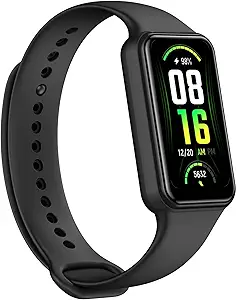
The Amazfit Band 7 maximizes screen real estate and endurance for exactly fifty bucks. Featuring a massive 1.47-inch always-on AMOLED display—112% larger than its predecessor—it tracks 120 sports modes while surviving up to 18 days away from a charger.
1.47-inch AMOLED always-on display. 232 mAh battery lasts 18-28 days. 120 sports modes. 5 ATM water resistance. Rapid heart rate, sleep, and stress tracking with Alexa built-in.
The AMOLED screen is remarkably punchy for a budget device, and squeezing 18 days from a 232 mAh battery is liberating. However, the built-in Alexa integration is painfully sluggish on the Zepp OS, often timing out before processing basic commands.
Verdict
Best for Multi-Week Battery Life. Buy this if you want a vibrant AMOLED screen, 120 sports modes, and 18 days of battery for $50.
Buying Guide
Form Factor Dictates Fidelity
You won’t track your sleep if your hardware is uncomfortable. Watches with bulky 42mm screens or heavy stainless steel cases often dig into your wrist when you sleep on your side. If you are a restless sleeper, prioritize ultra-slim profiles like the 9.99mm Xiaomi Band or switch entirely to finger-based sensors like the Oura Ring. Your finger actually provides a more accurate pulse reading than your wrist due to closer proximity to major capillaries.
The Battery Life Trap
Devices with 1-to-2 day battery lives, like the Apple Watch, require rigorous routine management. If you want to use it for sleep tracking, you have to sacrifice daytime wear to charge it—usually during a morning shower or evening commute. Conversely, devices like the WITHINGS ScanWatch 2 (35 days) or Amazfit Band 7 (18 days) offer uninterrupted data streams. Continuous battery life directly correlates with the completeness of your overnight health data.
Hidden Subscription Costs
Don’t just look at the hardware price tag. Devices like the Oura Ring Gen3 and WHOOP 4.0 lock their best analytical features behind monthly paywalls. Oura requires a $5.99 monthly membership after the first month to see your 20 biometrics, and WHOOP becomes a rolling subscription after the initial 12-month period expires. If you want a one-and-done purchase, stick to ecosystem-bound devices like Garmin or Apple.
Screens vs. Sleep Hygiene
Having a glowing AMOLED touchscreen on your wrist can sabotage the very sleep you are trying to optimize. If you habitually check notifications when you wake up in the middle of the night, a screenless tracker like the WHOOP 4.0 or a subtle analog face like the WITHINGS ScanWatch is superior. Removing the blue light temptation entirely helps maintain natural melatonin production during crucial nighttime hours.
Medical Alerts vs. Fitness Goals
Decide if you are tracking fitness or monitoring health. If you want to know how yesterday’s alcohol affected today’s workout, WHOOP’s behavioral journaling is best. But if you have clinical concerns, prioritize devices with FDA-cleared features. The Apple Watch Series 11 offers hypertension notifications and sleep apnea detection, while the WITHINGS takes a 30-second medical-grade ECG to detect AFib. Know what baseline data you actually need before paying for sensors you won’t use.
Frequently Asked Questions
Conclusion
Stop relying on guesswork to fix your fatigue. If you want clinical accuracy without a screen, order the Oura Ring. If you want maximum battery on a budget, grab the Amazfit Band 7. Pick the tracker that fits your wrist and your routine, and finally get your sleep data.