Roborock Qrevo S Pro Review: Does 18,500Pa and a Self-Washing Dock Actually Mean Less Work?
The Qrevo S Pro is built around one promise: you empty the dust bag every couple months instead of the bin every couple days.
Roborock’s 2026 Qrevo S Pro pairs 18,500Pa suction with a dock that bags dust for 7-9 weeks at a time, washes its own mop pads at 167°F, and dries them with 113°F warm air so they don’t turn sour between runs. It’s aimed at pet owners and busy households who want a robot that runs the full cleaning loop — vacuum, mop, empty, wash, dry — without a person stepping in.
- The dock does the dirty work A sealed 2.7L dust bag rated for 7-9 weeks means you’re not touching a bin bin every few days, and the 167°F mop wash plus 113°F air dry keeps mop pads from smelling musty between cleanings.
- Suction that handles litter and pet hair 18,500Pa is strong enough to pull cat litter out of grout lines and lift embedded pet hair from carpet, not just surface dust on hardwood.
- Tangle-proofing actually reduces maintenance The all-rubber main brush and zero-tangle side brush mean less time picking hair out of the roller after every run, a real pain point with older robot vacuums.
- Carpet handling adjusts without being told The robot auto-detects carpet, boosts suction, and lifts the mop 10mm so it doesn’t drag a wet pad across your rug — no manual mode-switching required.
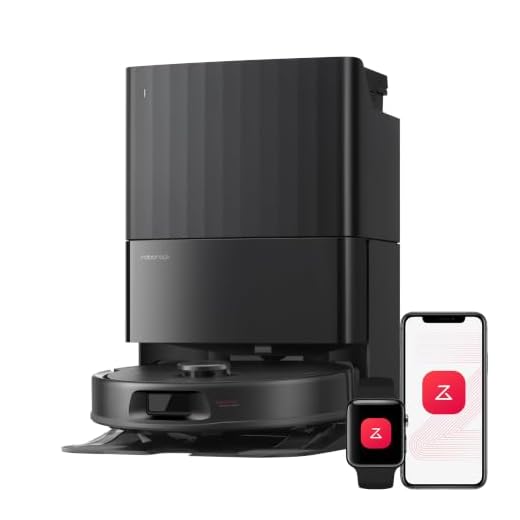
Empties into a sealed 2.7L bag for up to 9 weeks hands-free, while 167°F mop washing and 113°F warm-air drying keep floors fresh without lifting a finger.
| Suction Power | 18,500 Pa |
| Dust Bag Capacity / Lifespan | 2.7L sealed bag, lasts 7-9 weeks |
| Mop Self-Clean Temperature | 167°F (75°C) |
| Mop Drying Temperature | 113°F warm air dry |
| Carpet Mop Lift Height | 10mm automatic lift |
| Low-Profile Clearance | 3.8 in for under-furniture cleaning |
| Noise Level | 55 dB |
| Navigation / AI | Roborock SmartPlan 2.0 with obstacle avoidance |
| WiFi Compatibility | 2.4 GHz only (no 5 GHz support) |
| Brush System | All-rubber main brush, zero-tangle side brush |
- 2.7L sealed dust bag genuinely stretches to 7-9 weeks between bag changes, even in a shedding-heavy household
- 18,500Pa pulls cat litter and ground-in pet hair out of carpet, not just hardwood dust
- 167°F mop wash plus 113°F drying stops the sour-mop smell that plagues cheaper self-cleaning docks
- Zero-tangle side brush and rubber main roller cut way down on the hair-picking chore after each cycle
- 3.8 inch low-profile body gets under most beds and sofas that taller robots can’t reach
- Automatic carpet detection with 10mm mop lift means you don’t have to babysit room-by-room settings
- 2.4 GHz-only WiFi is a step behind competitors offering dual-band, which can complicate setup on mesh networks that prioritize 5 GHz
- The all-in-one dock is large and needs real floor and wall clearance, which is a hard sell in small apartments
- Obstacle avoidance handles shoes and cords well but still occasionally misjudges thin furniture legs in cluttered rooms
Choosing the right robot vacuum and mop
-
Suction power vs. real-world debrisHighPa ratings on the box don't always translate to picking up litter or embedded pet hair.Look for15,000Pa or higher if you have pets or carpet, with documented performance on litter and hair, not just dustAvoidRobots advertising suction numbers without any carpet or pet-hair specific claims
-
Dock bag capacity and intervalHighThe whole point of a self-emptying dock is reducing how often you touch the machine.Look forSealed bags rated for 6+ weeks and at least 2.5L capacity for multi-pet homesAvoidDocks with small or unsealed bags that need emptying weekly, which defeats the purpose
-
Mop washing and drying temperatureHighA wet mop pad sitting in a dock for hours breeds odor and bacteria if it isn't properly cleaned and dried.Look forHot water washing above 140°F and active warm-air drying, not passive air-dryingAvoidDocks that rinse with cold or room-temp water and skip heated drying entirely
-
Brush design for hair and tanglesMediumStandard bristle brushes wrap hair quickly and require frequent manual cleaning.Look forAll-rubber or dual-rubber main brushes paired with anti-tangle side brush designsAvoidBristled brushes marketed as 'pet-friendly' without an explicit anti-tangle mechanism
-
Low-profile clearance and obstacle handlingMediumA robot that can't fit under furniture or that gets stuck on cords leaves gaps in coverage.Look forUnder 4 inches of height along with camera or lidar-based obstacle detectionAvoidRobots relying solely on bump sensors, which miss low obstacles and cause repeated snags
Common questions
How often do you actually need to empty the dust bag on the Qrevo S Pro?
Roborock rates the sealed 2.7L bag for 7-9 weeks, and that holds up for a typical single-pet household with regular cleaning cycles. Multi-pet or heavy-shedding homes will land closer to the lower end of that range, but it’s still a dramatic drop from emptying a bagless bin every few runs.
Does the 167°F mop wash actually prevent the musty smell other robot mops get?
Yes, the hot-water wash combined with 113°F warm air drying is specifically designed to stop bacteria growth on damp mop pads, which is what causes that sour smell in cheaper docks. As long as the dock’s water tank is kept filled and the pads aren’t left wet for extended periods outside a cycle, odor isn’t an issue.
Will the 2.4 GHz-only WiFi cause setup problems?
It works fine as long as your router broadcasts a 2.4 GHz band, which most do, but you’ll need to connect to that specific network name rather than a combined or 5 GHz-only SSID. If your mesh system auto-merges bands under one name, you may need to temporarily split them during setup.
Can this robot vacuum clean carpets and hardwood in the same run without manual switching?
Yes, SmartPlan 2.0 detects carpet automatically, boosts suction, and lifts the mop pad 10mm so it doesn’t wet the carpet, then drops back down for mopping once it returns to hard flooring. You don’t need to set room-by-room profiles for this to work correctly.
The Qrevo S Pro delivers on the hands-off premise rather than just marketing it — strong suction that handles litter and embedded pet hair, a dock that genuinely stretches maintenance intervals to weeks, and brush design that cuts down on the hair-picking chore. The dock’s footprint and 2.4GHz-only WiFi are real but minor caveats against what it gets right.
- 18,500Pa suction and automatic carpet-mode switching handle mixed flooring without manual input
- The 2.7L sealed bag and 167°F/113°F mop wash-and-dry cycle genuinely extend hands-off intervals to weeks
- Anti-tangle brush design meaningfully cuts the maintenance time pet owners usually dread
For pet owners and busy households tired of daily bin-emptying and smelly mop pads, the Qrevo S Pro is a legitimate upgrade that reduces weekly maintenance to a near-monthly chore. It’s not the pick for small apartments short on dock space or 5GHz-only networks, but for everyone else it earns its spot as a top-tier hands-off cleaner.