Why the color of the glow matters more than the brightness
Most "night lights" sold for kids' rooms are just dim white LEDs, and dim white light still tells a developing brain it's daytime.
Blue and white wavelengths suppress melatonin even at low lumens, which is why a light can look soft and still wreck a bedtime routine. The night lights and bulbs that actually help sit in the amber-to-red range (under 1900K, ideally 670nm-1600K), and the good ones let you dim them without shifting that color. The rest of this guide separates purpose-built sleep lighting from bulbs that just happen to look warm on the shelf.
- Color temperature beats brand names Anything above 2000K starts leaking blue wavelengths regardless of how it’s marketed. Look for a stated Kelvin number under 1900K, not just the word “warm.”
- Dimmable doesn't always mean color-safe Cheap dimmers on standard bulbs shift color temperature as brightness drops. Purpose-built amber/red lights hold their color across the whole dimming range.
- Bulbs solve more rooms than plug-ins A standalone night light only covers one spot, but an E26 amber bulb swaps into any existing lamp, closet fixture, or hallway socket already in the house.
- The screen-time gap still needs closing A great night light doesn’t undo an hour of tablet time right before it turns on. Blue light glasses for pre-bed screen use close that gap for kids who won’t give up the iPad.




Best Overall: Amber & Red Sleep Aid Night Light Dimmable 2-in-1
Dual amber and red 670nm LEDs stay 100% blue-light-free, with infinite touch dimming from 10-100% for a custom bedtime glow.
- Two distinct color modes cover both a subtle glow for sleeping and a brighter amber for reading or diaper changes
- Touch dimming goes all the way down to 10% without shifting color temperature
- Cordless and rechargeable, so it works for travel and doesn’t need an outlet next to the crib
- Genuinely designed around melatonin research rather than retrofitted from a generic LED puck
- Costs more than a basic plug-in night light
- Single unit only covers one room unless you buy a second
- Touch controls can be fiddly for toddlers who like to fidget with buttons
Best Premium: hooga Sleep Light Bulb 1600K
1600K amber bulbs block 99.94% of blue light, the lowest color temp of any sleep bulb, for melatonin-friendly nursery and bedroom lighting.
- 1600K is noticeably deeper amber than the standard 1900K sleep bulbs, closer to firelight than a nightstand lamp
- Drops into any existing E26 fixture, so no new hardware to mount or charge
- Two-bulb pack covers both the kid’s room and the nursery or hallway in one purchase
- hooga’s reputation in the sleep-lighting space means consistent color across the batch
- Needs a lamp or fixture already in place, it isn’t a standalone light
- Priced higher per bulb than the 1900K alternative
- 7W-equivalent output is dim for anything beyond ambient glow
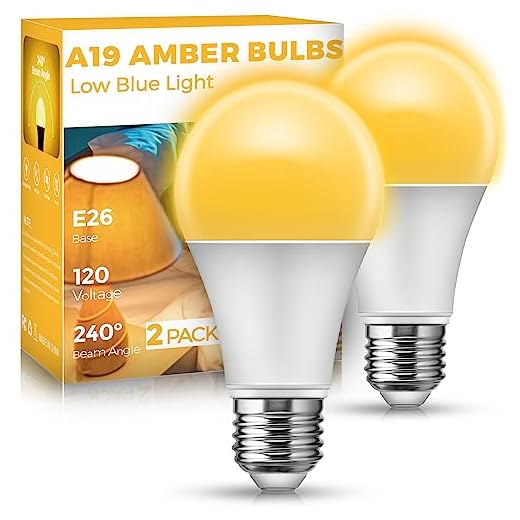
Best Value: Sleep Light Bulb 1900K 60W Equivalent
1900K amber bulbs cut 99.9% of blue light at a 60W-equivalent 750 lumens, delivering budget-friendly sleep-safe brightness for any fixture.
- 750 lumens at 60W-equivalent means it can actually light a room, not just glow in a corner
- 99.9% blue light blocked keeps it functionally as sleep-safe as the premium option
- Lowest per-bulb price of any product in this guide
- Standard E26 base works in existing lamps, overhead fixtures, or closets
- 1900K runs slightly warmer/whiter than the 1600K premium pick
- Full brightness at 750 lumens can be too much for an actual sleeping child, better suited to hallways or play areas
- Not dimmable on its own without a compatible dimmer switch
Best for Reading in Bed: hooga Amber Book Light
This 1600K clip-on book light is 99.94% blue-light-free with a 360° gooseneck and 1200mAh battery, so kids can read in bed without disrupting sleep.
- 1600K amber is dim enough to read by without triggering the same wakefulness response as a phone flashlight or white book light
- Gooseneck clip aims light exactly at the page instead of lighting up the whole room
- Rechargeable battery means no scrambling for AAAs at bedtime
- Small and light enough for a kid to clip onto a book themselves
- Light is dim by design, not great for kids who need brighter illumination to read comfortably
- Clip grip can slip off thicker hardcovers
- Battery life drops noticeably once the amber LED is run at higher brightness
Best for Kids' Screen Time: DUCO Blue Light Glasses for Kids
Amber-tinted lenses block up to 90% of blue light from screens, easing eye strain and sleep disruption for kids during TV, tablet, and gaming time.
- Cuts blue light during the exact window a good night light can’t help with, active screen use before lights-out
- Frame sizing built for kids instead of shrunk-down adult glasses
- Amber tint noticeably reduces eye strain during long TV or tablet sessions
- Affordable enough to buy a backup pair for the inevitable lost pair
- Only useful if the kid will actually wear them, no enforcement mechanism there
- 90% blockage is solid but well short of the 99%+ red-lens options for teens
- Tint noticeably changes on-screen colors, which some kids find distracting at first
Best for Older Kids/Teens: Professional Sleep Glasses with Red Lens
High-density deep red lenses with dual AR coating block 99.99% of blue light, the max level for teens’ late-night scrolling and gaming sessions.
- 99.99% blockage is the strongest in this guide, built for teens gaming or scrolling right up until lights-out
- Dual anti-reflective coating cuts glare on top of the blue-light filtering
- Two-pack means a backup pair exists for the one that inevitably goes missing
- Red lens intensity signals to older kids that this is different from casual amber glasses, which helps with actual adoption
- Deep red tint makes screens look heavily distorted, not ideal for anything color-sensitive like homework or art
- Bulkier frame styling skews adult, less appealing to younger tweens
- Overkill for kids who aren’t on screens late into the evening
Side-by-side comparison
|
Best Overall
Amber & Red Sleep Aid Night Light Dimmable 2-in-1,
|
Best Premium
hooga Sleep Light Bulb, Amber Light Bulbs for Slee
|
Best Value
Sleep Light Bulb, Amber Light Bulbs for Sleep Ther
|
Best for Reading in Bed
hooga Amber Book Light, Rechargeable Clip-On Blue
|
Best for Kids' Screen Time
DUCO Blue Light Glasses for Kids Boys Girls Blue R
|
Best for Older Kids/Teens
2 Packs Professional Sleep Glasses with 99.9% Blue
|
|
|---|---|---|---|---|---|---|
|
|
|
|
|
|
|
|
| Product Type | Night light | Light bulb | Light bulb | Clip-on book light | Blue light glasses | Blue light glasses |
| Color Temp / Blockage | 670nm red / 1700K amber | 1600K, 99.94% blocked | 1900K, 99.9% blocked | 1600K, 99.94% blocked | Up to 90% blocked | 99.99% blocked |
| Dimmable | Yes | No | No | Yes | No | No |
| Rechargeable/Cordless | Yes | No | No | Yes | No | No |
| Best For | Bedside sleep aid | Nursery/bedroom fixtures | Multi-room budget swap | Bedtime reading | Pre-bed screen time | Teen late-night screens |
| Price | $9.99 | $18.99 | $11.99 | $12.99 | $14.99 | $12.99 |
| BUY NOW | BUY NOW | BUY NOW | BUY NOW | BUY NOW | BUY NOW |
What to look for in Blue Light Blocking Night Lights for Kids' Bedrooms
Does a blue light blocking night light actually help kids fall asleep faster?
It removes one obstacle to melatonin production, but it’s not a standalone fix. Amber and red light under 1900K don’t suppress melatonin the way white or blue light does, so a child’s body still gets the “it’s nighttime” signal even with a light on. It works best paired with reduced screen time before bed, not as a substitute for it.
What's the difference between amber and red night lights?
Amber lights (1600-1900K) sit closer to candlelight and are bright enough to navigate a room or read by. Red lights (around 630-670nm) are dimmer and sit even further from the blue spectrum, making them better for a bedside glow you’ll fall asleep to rather than active use. The Amber & Red Sleep Aid Night Light covers both cases in one unit.
Can I just use a regular dimmer to turn down a white night light instead of buying an amber one?
No, dimming a standard white LED reduces brightness but doesn’t remove the blue wavelengths, they’re still present, just less intense. Melatonin suppression happens from exposure to blue-spectrum light regardless of brightness level, so a dim white light can still delay sleep onset almost as much as a bright one.
Are blue light blocking glasses necessary if we already have amber night lights in the bedroom?
They solve a different problem. Night lights address ambient bedroom lighting after the screens go off; glasses address blue light exposure while screens are still in use. If a kid is on a tablet or watching TV up until lights-out, glasses close that gap in a way no night light can, since the light source is coming straight from the screen, not the room.
The bottom line
- Amber & Red Sleep Aid Night Light Dimmable 2-in-1 is the most purpose-built option and the right default pick for a kid's bedroom.
- hooga Sleep Light Bulb 1600K is worth the premium if you want the deepest amber available for a nursery and bedroom combo.
- Sleep Light Bulb 1900K delivers nearly identical blue-light protection at the lowest cost per bulb for outfitting multiple rooms.
- hooga Amber Book Light solves bedtime reading without reintroducing the blue light a phone or white book light would.
- DUCO Blue Light Glasses for Kids close the pre-bed screen-time gap that no night light alone can fix.
- Professional Sleep Glasses with Red Lens give teens near-total blue light blocking for the late-night screen habits younger kids don't have yet.
For most families, the Amber & Red Sleep Aid Night Light is the smartest single purchase, it’s built specifically for bedtime rather than adapted from general lighting. If you want to upgrade every fixture in the house at once, the hooga or budget amber bulbs handle that at two different price points.