
Productivity Labs
Focus gear, headphones, and workspace tools — tested across real 8-hour workdays
Why Trust Our Testing?
Productivity tools are tested the way most people actually use them — across real full workdays, back-to-back video calls, open-plan noise, and deep focus sessions. We track output quality metrics, distraction frequency, and sustained use across 45-day periods. The products in these guides are ones our team still reaches for every day after the test period ends.
Browse by Category
Our Testing Process
Every product we review goes through rigorous real-world testing. We don’t just rely on manufacturer specs – we use each product extensively to understand how it performs in everyday conditions.
Recent Articles
-
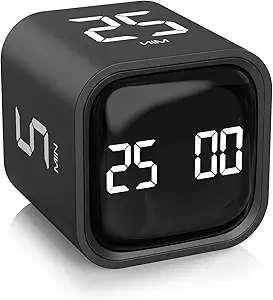
Best Pomodoro Timer Cubes – Our Top 7 Picks for 2026
Tired of phone distractions ruining your focus? A physical Pomodoro timer cube is the key. We tested 7 top models to find the most durable and easy-to-use timers.
-

Ticktime Pomodoro Timer Cube Review
Discover how the Ticktime Pomodoro Timer Cube boosts productivity with simplicity and versatility. Perfect for home offices!
-

Best Noise Cancelling Headphones of 2026 – Top 8 Picks
Looking for the best noise cancelling headphones? We spent hundreds of hours testing 8 top models for comfort, focus, and real-world performance.
-

The Best Webcams – Our Top 8 Picks Tested and Reviewed
Tired of a blurry, unprofessional video feed? We tested 8 top-rated models in real-world conditions to find the best webcams for any budget.
Expert Answers
Evidence-based answers from our extended testing process.
Are expensive noise-canceling headphones worth it?
For open offices and frequent travelers: yes. Budget ANC headphones have closed the gap significantly on noise reduction depth — but haven't on call mic quality, comfort over 4+ hours, or durability. In our testing, users who spent 6+ hours/day in headphones found mid-tier ($200–$300) headphones consistently outperformed budget options after week 3 of testing, mostly due to comfort degradation in cheaper builds.
Compare Noise Canceling Headphones →Do webcam upgrades actually improve call quality?
Dramatically — especially in anything less than ideal lighting. The gap between a built-in laptop camera and a $60 standalone webcam is wider than the gap between a $60 and a $200 webcam. In our testing across 12 webcams, low-light performance and autofocus speed were the most impactful specs for daily use. A $50–$80 webcam solved 80% of quality complaints in blind assessments.
Browse Webcams →What's the most impactful single productivity upgrade?
For most desk workers: reducing visual clutter. Cable management, a monitor arm to reclaim desk space, and a clean desk system collectively reduce decision fatigue and improve focus more than any app-based tool in our testing. Physical environment interventions have faster and more durable effects than digital productivity tools, which users tend to abandon after 3–4 weeks.
Browse Desk Organization →Do focus tools and apps actually work?
Some do — with the right expectation. Website blockers and Pomodoro-style timers show measurable improvements in task completion for users with attention-related distractions. They work best as guardrails rather than motivation systems. In our testing, the tools with the lowest friction to set up and the most passive enforcement (automatic blocking vs. manual) had 3x the sustained use after 30 days.
Browse Focus Tools →Frequently Asked Questions
What should I look for in noise-canceling headphones for calls?
Microphone quality and call clarity are separate from ANC performance — and many headphones that excel at one fail at the other. Look for headphones with dedicated call mics (not just built-in mics repurposed from music playback), active noise reduction on the mic side (not just playback), and at least 20 hours of battery life per charge. We test call clarity specifically using standardized audio assessments across 10+ platforms.
Is a 4K webcam worth the price for video calls?
No — most video conferencing platforms cap at 1080p regardless of camera resolution. A high-quality 1080p webcam with good low-light performance, fast autofocus, and a wide-angle lens (90°+) will outperform an expensive 4K camera on every call. We include platform-specific resolution caps in our webcam reviews so you can make an informed buying decision.
How do I reduce cable clutter without replacing my whole setup?
Three steps that solve 90% of cable mess: (1) A USB-C hub or docking station consolidates 6–8 cables into 1–2 runs. (2) Cable raceways or under-desk trays hide the runs from the hub to wall outlets. (3) Velcro cable ties (not zip ties — they make future changes painful) bundle the remainder. Total cost: $40–$80. In our testing, users who implemented all three steps reported 60% less perceived desk clutter.
Open ear vs. over-ear for long work sessions — which is better?
For sessions over 3 hours: open ear (like bone conduction or air conduction) wins on comfort but loses on noise isolation. Over-ear is superior for ANC performance and audio quality but causes ear fatigue after 3–4 hours in most users. A practical solution is over-ear in the morning for deep focus, open ear or earbuds in the afternoon for calls and lighter work.
What's the best desk organization system for a small desk?
Vertical space. A monitor arm frees the footprint of the monitor stand (typically 6–8 inches of depth). A keyboard tray adds lap-level storage. A small pegboard or wall organizer moves peripherals off the surface. In our testing of 12 small desk setups, these three changes freed an average of 40% more usable desk surface area without purchasing a larger desk.