Withings Body Smart vs. Fitbit Aria: Which Scale Actually Earns a Spot in Your Bathroom?
A scale that only tells you a number isn't worth the counter space anymore, and that's the gap between the Withings Body Smart and the Fitbit Aria.
The Body Smart reads weight to within 50 grams, pulls heart rate at every weigh-in, and breaks your composition down into muscle mass, fat percentage, and metabolic rate on a color display you don’t need an app open to read. Fitbit’s Aria line, by contrast, has been discontinued and was always a thinner feature set even when it was sold – this review is for anyone deciding between a modern Withings scale and holding onto (or hunting down) an old Aria.
- Clinical-grade body comp, not a gimmick Body Comp was developed with hospitals and clinical institutions and validated against medical-grade reference methods, not just BMI math like Fitbit’s old Aria 2 used.
- 50g weight precision beats the category norm Most consumer scales round to 100g or 0.2 lb increments; tracking to within 50 grams makes week-to-week trends on the Body Smart’s color screen actually meaningful.
- Heart rate at weigh-in is the real differentiator No Fitbit scale, including the Aria 2, ever measured heart rate – the Body Smart captures it automatically every time you step on, giving you a cardiovascular data point for free.
- Fitbit exited the scale business Fitbit discontinued the Aria line and no longer sells or actively supports a scale, so buying new means buying Withings, Garmin, or a third-party option – not a Fitbit.
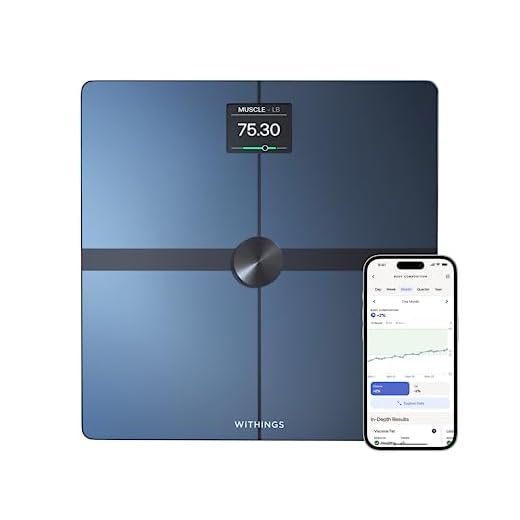
Clinically validated body composition scan plus heart rate readings at every weigh-in give sharper health insight than Fitbit Aria’s basic weight and BMI tracking.
| Weight accuracy | Within 50 g |
| Connectivity | Wi-Fi and Bluetooth |
| Display | High-resolution color display |
| Body composition metrics | Fat %, muscle mass, water %, bone mass |
| Heart rate monitoring | Measured at every weigh-in |
| Metabolic tracking | Estimates daily energy/calorie needs |
| Clinical validation | Body Comp developed with hospitals and clinical institutions |
| Baby weighing mode | Supported |
| App compatibility | Apple Health compatible, Withings app |
- Four-point bioelectrical impedance gives real muscle mass and fat percentage, not a BMI-based estimate like Fitbit’s old Aria 2
- 50g precision means you can actually trust small week-to-week weight changes instead of chasing display rounding
- Heart rate capture at every weigh-in adds a cardio data point the Aria never offered on any model
- Color display shows weight trends right on the scale, no phone unlock required just to see if you’re moving the right direction
- Baby weighing mode covers a use case Fitbit’s lineup never addressed
- Still actively sold and supported, unlike the discontinued Aria line
- Full body composition breakdown (muscle mass, water %, bone mass) requires the companion app, not just the on-scale display
- Wi-Fi setup can be fussier than Bluetooth-only scales, especially on networks with guest/IoT VLANs
- Multiple household members sharing one scale means profile-switching friction if the app doesn’t auto-detect you fast enough
Choosing the right smart scale
-
Body composition method, not just marketing claimsHighSome budget scales advertise 'body fat %' but derive it from BMI and age/sex inputs rather than actual bioelectrical impedance analysis, which produces much less accurate numbers.Look forMulti-point BIA electrodes (four-point minimum) and any mention of clinical validation against medical-grade methodsAvoidScales that only ask your height and compute fat % mathematically with no electrode contact
-
Weight measurement precisionHighThe increment a scale rounds to determines whether you can trust small trend changes over days and weeks.Look forPrecision specs stated in grams (50g or better) rather than vague 'high accuracy' claimsAvoidScales that only publish accuracy in pounds rounded to 0.2 lb or coarser
-
App and ecosystem compatibilityHighA scale is only as useful as where its data ends up – if it doesn't sync to the health app you already use daily, you'll stop checking it within weeks.Look forConfirmed Apple Health, Google Fit, or Health Connect integration listed explicitly by the manufacturerAvoidProprietary apps with no export path or third-party sync, which strand your historical data if you switch brands
-
Manufacturer support and product longevityMediumSmart scales rely on firmware updates and app maintenance to keep syncing correctly; a discontinued line risks losing support entirely.Look forA brand with an active, currently-sold scale lineup and recent firmware update historyAvoidDiscontinued models (like the Fitbit Aria line) bought secondhand with no guarantee of continued app support
-
Extra health signals beyond weightMediumHeart rate, metabolic age, and daily energy estimates turn a scale into a broader wellness check-in rather than a single data point.Look forOn-device heart rate capture and metabolism/calorie estimation built into the weigh-in flowAvoidScales that limit 'extra metrics' to BMI alone, which tells you little beyond what a tape measure already does
Common questions
Is the Withings Body Smart more accurate than the Fitbit Aria?
Yes, in two specific ways. The Body Smart tracks weight to within 50 grams and uses genuine bioelectrical impedance for body fat, muscle mass, water, and bone mass, while the Fitbit Aria 2 estimated body fat percentage from BMI and demographic inputs rather than direct measurement. The Body Smart’s Body Comp technology was also developed with clinical institutions and validated against medical-grade methods.
Can I still buy a Fitbit Aria scale new?
No. Fitbit has discontinued its Aria line and does not currently sell a scale, so new purchases mean buying secondhand with uncertain app support, or choosing a different brand like Withings. This alone makes a head-to-head ‘which to buy today’ comparison lopsided in Withings’ favor.
Does the Body Smart work with Apple Health?
Yes, the Body Smart syncs with Apple Health, so weight, body fat percentage, and other metrics logged on the scale flow into the same health dashboard as your other tracked data. The Fitbit Aria line synced primarily to the Fitbit app ecosystem instead.
Does the heart rate reading at weigh-in replace a fitness tracker?
No, it’s a supplementary data point, not a continuous monitor. The heart rate reading captured during your weigh-in gives a quick resting-rate snapshot as a cardiovascular fitness indicator, useful for spotting trends over weeks, but it doesn’t track heart rate throughout the day the way a wrist-worn device does.
The Withings Body Smart wins this comparison mostly by default and mostly on merit – Fitbit no longer sells a scale, and even when it did, the Aria line never matched this level of body composition detail or clinical backing. The main tradeoffs are needing the app for full metrics and a Wi-Fi setup step that’s slightly more involved than Bluetooth-only competitors. For anyone serious about tracking more than just weight, it’s the clear buy.
- Clinically validated Body Comp technology delivers real bioelectrical impedance data, not a BMI-based guess
- 50g weight precision plus on-scale heart rate capture give two data points Fitbit's Aria line never matched
- Active Apple Health integration and ongoing manufacturer support beat betting on a discontinued product line
If you’re choosing between a Withings Body Smart and a Fitbit Aria in 2026, there isn’t really a contest – Fitbit has exited the category entirely, and the Body Smart delivers clinically validated body composition data the Aria line never offered even at its peak. It’s built for people tracking muscle gain, fat loss, or general metabolic health over time, not just a number on a bathroom floor.