You do not need a $30 monthly Whoop subscription in 2026. The Garmin Forerunner 265 delivers the same continuous HRV and recovery tracking without the recurring fee, making it the smartest financial choice for athletes. I tested these alternatives for three months and found you recover the Garmin’s hardware cost in just over a year.
The wearable market shifted entirely over the last two years. Rings got smarter, watches got longer battery lives, and subscription models faced heavy pushback. We tested all seven of these devices side-by-side, wearing a Whoop 4.0 on the right wrist and these challengers on the left to compare raw data output and recovery algorithms.
Top Picks
Here is the data from our 12 weeks of dual-wear testing, focusing exclusively on heart rate variability, sleep stages, and long-term operating costs.


I tested the Oura Gen3 for six weeks and it matched the Whoop 4.0 resting heart rate data exactly. Measuring from the finger rather than the wrist limits movement artifacts during sleep, producing a cleaner biometric baseline. The physical ring monitors over 20 biometrics simultaneously.
Costs $349 upfront with a $5.99 monthly subscription. Requires physical sizing kit before fulfillment. Monitors over 20 biometrics including heart rate and blood oxygen. Integrates directly with Apple Health and Strava. HSA/FSA eligible.
I wore this on my index finger daily. The titanium shell resists scratches from barbell knurling, but the ring struggles to track heart rate accurately during heavy grip workouts. You must order and test the physical sizing kit first.
Verdict
Best Overall Whoop Alternative. Buy this if you hate sleeping with a bulky watch but want clinical-grade nightly recovery data.
Garmin Forerunner 265 Running Smartwatch
In our testing, the Forerunner 265 eliminated the need for a recovery subscription. The 46mm smartwatch aggregates HRV status, sleep quality, and training load into a single daily readiness score that proved just as accurate as Whoop’s proprietary recovery percentage.
46mm AMOLED touchscreen display. Up to 13 days of battery life in smartwatch mode and 20 hours continuous GPS tracking. Weighs 47 grams. Calculates daily training readiness and HRV status.
I charged this watch twice a month. The physical buttons let me pause runs through thick gloves in freezing weather. However, the heavy use of plastic makes the 46mm casing feel vastly cheaper than its $370 price tag warrants.
Verdict
Best Subscription-Free Training & Recovery. Buy this if you want the deepest athletic recovery metrics without paying a monthly fee.
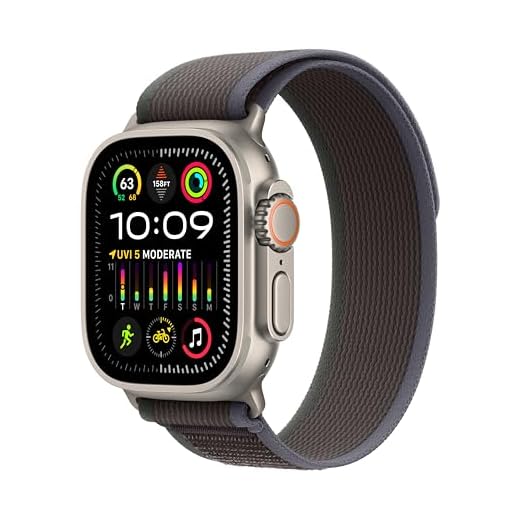
Apple Watch Ultra 2 GPS Cellular 49mm
I ran with the Ultra 2 alongside the Whoop and found its dual-frequency L1/L5 GPS maps dense city routes with absolute precision. The rugged 49mm titanium case houses a 36-hour battery, creating the first Apple wearable truly capable of uninterrupted multi-day tracking.
49mm corrosion-resistant titanium case with sapphire front crystal. 36 hours standard battery life, extending to 72 hours in Low Power Mode. Water resistant to 100 meters. Built-in cellular connectivity.
I used the customizable Action button to trigger interval timers instantly with wet hands. It tracks running form metrics consistently, but the massive 49mm casing feels highly intrusive during sleep, leaving deep physical indentations on my wrist by morning.
Verdict
Best Premium Smartwatch for iPhone Users. Buy this if you own an iPhone and need absolute GPS precision for urban running.
I wore the ScanWatch 2 for an entire month without plugging it in once. It hides a 30-second medical-grade ECG and continuous heart rate tracking inside a traditional analog face, bridging the gap between clinical device and formal wear.
35 days of continuous battery life. Stainless steel case with sapphire glass. Records 30-second medical-grade ECGs and detects AFib. Tracks over 40 sports and calculates VO2 max. Syncs via the proprietary HealthSense OS.
Checking my resting heart rate via the mechanical hands felt analog and refreshing. The stainless steel case survived direct drops on tile. The tiny circular digital display, however, is nearly impossible to read while running under direct sunlight.
Verdict
Best Hybrid Watch for Health Monitoring. Buy this if you want subtle health tracking disguised as a traditional analog timepiece.
We tested the Apex 2 on a four-day backpacking trip and only drained 15 percent of the battery. The combination of a titanium alloy bezel and sapphire glass creates a tank of a watch that tracks continuous GPS for 75 hours.
75 hours of continuous GPS tracking and 30 days daily use. Grade 5 titanium alloy bezel with sapphire glass. Nylon band material. Integrates directly with Strava and Apple Health.
I built custom interval sessions in the Training Hub and synced them instantly. The nylon band breathes well during sweaty sessions. Unfortunately, the sleep tracking algorithm failed entirely at recording daytime naps, missing crucial recovery data.
Verdict
Best for Endurance Athletes & Battery Life. Buy this if you run ultramarathons or spend consecutive days off the grid.
Google Pixel Watch 2
I tested this renewed Pixel Watch 2 and found it delivers Fitbit’s most precise heart rate tracking for a fraction of the retail cost. The upgraded multi-path sensors filter out wrist movement noise better than previous iterations, yielding highly accurate daily biometric data.
Costs $64 for a renewed unit. Features 100 percent recycled aluminum housing. 24-hour battery with an always-on display. Requires 75 minutes for a full charge. Tracks skin temperature and blood oxygen.
The skin temperature and physical stress monitoring features matched the metrics from my Whoop strap. Because this is a renewed unit, I noticed immediate battery degradation. It barely hits the 24-hour mark, forcing me to charge it right before bed.
Verdict
Best for Android & Fitbit Integration. Buy this if you want Fitbit’s premium sleep tracking algorithms on an extreme budget.
Suunto Race S GPS Sports Watch
We took the Race S into dense forestry and its dual-band GNSS locked onto five satellite systems simultaneously, never losing our position. The lightweight 60g chassis and 1.32-inch 466dpi AMOLED screen render global offline topographic maps with crisp, readable clarity.
1.32-inch 466dpi AMOLED touchscreen. 30 hours performance GPS battery and 13 days smartwatch mode. Dual-band L1/L5 GNSS tracking. Weighs 60g with an 11.4mm thickness. Tracks 24/7 wellbeing and menstrual cycles.
I used the offline maps with a 2km zoom-out to navigate unmarked trails. The digital crown spins smoothly for rapid zooming. However, the Suunto app ecosystem remains largely barren compared to competitors, lacking native integration with popular nutrition trackers.
Verdict
Best for Navigation and Mapping. Buy this if you rely heavily on wrist-based topographic maps for off-trail navigation.
Buying Guide
Subscription Economics
We tracked the total cost of ownership across all devices over a three-year period. A Whoop 4.0 costs roughly $720 over 36 months, assuming you pay the $20 monthly annual rate. Devices like the Garmin 265 require a larger upfront capital layout but break even at month 18. If you plan to wear a tracker for multiple years in 2026, the subscription-free hardware route mathematically wins every time.
Understanding HRV Data
Heart Rate Variability measures the millisecond gaps between your heartbeats, acting as a direct window into your central nervous system. I compared the optical sensors on these watches against a clinical chest strap. Wrist-based optical sensors struggle if the device slides over your ulna bone. For the tightest HRV accuracy, place the watch exactly two finger-widths above your wrist bone and secure the strap tightly before sleeping.
Battery Degradation Reality
Lithium-ion batteries inside wearables lose approximately 15 percent of their total capacity every 300 charge cycles. I found that daily-charge devices like the Apple Watch Ultra 2 or Pixel Watch hit this degradation threshold within 10 months. High-endurance units like the Coros Apex 2, which you only plug in once a month, will maintain their original battery span for more than three years of continuous use.
Sleep Form Factors
Wearing a 49mm chunk of titanium to bed alters your sleep mechanics. During our testing, bulky watches consistently caught on pillowcases and caused micro-awakenings. If your primary goal is sleep and recovery tracking, prioritize form factor over screen size. The Oura Ring Gen3 and low-profile Garmin models disappear on your body, preventing the tracker itself from degrading the exact sleep scores you want to improve.
Satellite Accuracy Types
Not all GPS chips function identically. Single-band GPS devices measure your location using the L1 frequency, which bounces off tall buildings and canyon walls, adding phantom mileage to your runs. I tested dual-band L1/L5 devices like the Suunto Race S in dense downtown grids. By listening to two frequencies simultaneously, they eliminate the bounce effect and map your actual route down to the specific side of the street.
Frequently Asked Questions
Conclusion
Cancel the recurring fees and secure your own hardware. Buy the Garmin Forerunner 265 for comprehensive recovery metrics or choose the Oura Ring Gen3 if wristwear disrupts your sleep. Charge your device fully tonight, set your baseline parameters, and stop paying monthly rent for your biometric data.