OMRON 10 Series Blood Pressure Monitor Review
If your desk chair is the most dangerous piece of furniture in your house, the OMRON 10 Series turns a 30-second cuff squeeze into an actual early-warning system.
Desk-bound workdays mean long stretches of sitting punctuated by stress spikes, and blood pressure doesn’t announce itself until something’s already wrong. The OMRON 10 Series is built for exactly that blind spot: a clinically validated upper-arm monitor with TruRead Technology, Bluetooth sync to Apple Health and Google Fit, and dual-user memory, so you can log a reading between meetings and actually see the trend instead of a single disconnected number. It’s aimed at anyone managing hypertension, recovering from a cardiac event, or simply tired of white-coat anxiety skewing their numbers at the doctor’s office.
- TruRead averages out the noise TruRead Technology takes multiple readings automatically and averages them, which smooths out the single-reading spikes that make one bad cuff placement look like a crisis.
- It catches more than a number Irregular Heart Beat Detection and the Hypertension Indicator flag issues during a routine measurement, giving you and your doctor a heads-up before symptoms show up.
- Two people, one monitor Dual-user support stores up to 100 readings each, so a couple sharing a home office setup doesn’t need two separate machines.
- Data actually goes somewhere Bluetooth sync to the free OMRON connect app pushes unlimited readings into Apple Health or Google Fit, turning scattered desk-side checks into a chart your cardiologist can actually use.
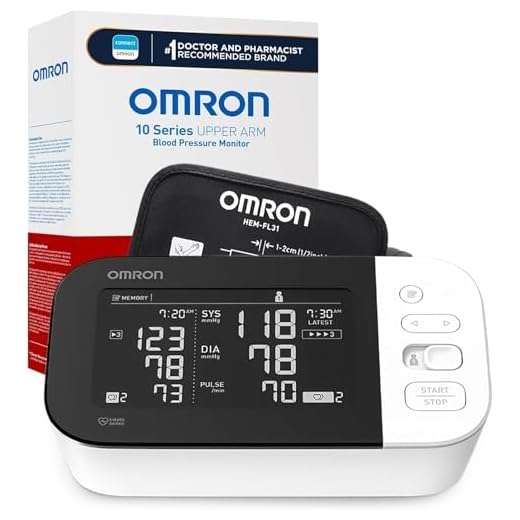
TruRead Technology auto-averages three readings for clinic-grade accuracy, while Irregular Heartbeat Detection flags issues standard cuffs miss.
| Measurement Technology | TruRead Technology (automatic multi-reading average) |
| Memory | 100 readings per user, 2-user support (200 total on-device) |
| App Storage | Unlimited via OMRON connect app (Bluetooth sync) |
| Cuff Type | ComFit upper-arm cuff, fits 9"–17" arm circumference |
| Health Alerts | Irregular Heart Beat Detection, Hypertension Indicator |
| Connectivity | Bluetooth; compatible with Apple Health and Google Fit |
| Power | 4 AA batteries or included AC adapter |
| In the Box | Monitor, ComFit cuff, AC adapter, 4 AA batteries, instruction manual, quick start guide |
| Brand Recognition | #1 doctor and pharmacist recommended blood pressure monitor brand |
- TruRead’s multi-reading average produces noticeably more consistent numbers than single-reading cuffs, especially right after a stressful call
- Irregular Heart Beat Detection and the Hypertension Indicator add real clinical value beyond just a systolic/diastolic number
- Dual-user memory for 100 readings each means a partner can track their own numbers on the same unit without mixing up history
- OMRON connect app syncs over Bluetooth and feeds Apple Health or Google Fit automatically, so readings land in the same dashboard as steps and sleep
- ComFit cuff’s wrap design fits a wide 9″–17″ arm range, so it works for most desk workers without buying a separate cuff size
- AC adapter is included, which matters if you’re taking daily readings at a desk and don’t want to burn through AA batteries
- On-device memory caps at 100 readings per user before older entries get overwritten, so skipping app syncs for a few months will lose history
- The ComFit wrap cuff is comfortable but still requires proper arm positioning at heart level, which is easy to get sloppy with when you’re rushing between Zoom calls
- Bluetooth pairing with the OMRON connect app can be finicky on first setup, occasionally requiring a re-pair if the phone’s Bluetooth was toggled
Choosing the right home blood pressure monitor
-
Reading consistency methodHighSingle-reading cuffs are vulnerable to one bad cuff placement or a stressful moment skewing the result.Look forMonitors with automatic multi-reading averaging, like OMRON's TruRead TechnologyAvoidBasic monitors that only take one reading per measurement with no averaging feature
-
Clinical alert featuresHighA good home monitor should flag problems beyond the raw numbers.Look forIrregular heartbeat detection and hypertension-range indicators built into the deviceAvoidMonitors that only display systolic/diastolic/pulse with no contextual alerts
-
Cuff fit and typeHighAn ill-fitting cuff is one of the most common causes of inaccurate home readings.Look forA wide arm-circumference range (9"–17" or similar) and an easy one-handed wrap designAvoidRigid pre-formed cuffs with a narrow fit range that don't match your arm size
-
App and ecosystem syncMediumTrend data over weeks matters more than any single reading for both you and your doctor.Look forBluetooth sync with unlimited cloud storage and compatibility with Apple Health or Google FitAvoidDevices with no app support or an app that only stores data locally on the device
-
Multi-user memoryMediumShared households benefit from one device tracking separate histories instead of overwriting each other's data.Look forDedicated per-user memory slots with distinct reading counts for each personAvoidSingle-profile monitors that blend everyone's readings into one undifferentiated log
Common questions
How accurate is the OMRON 10 Series compared to a doctor's office reading?
It’s clinically validated and uses TruRead Technology to automatically take and average multiple readings, which reduces the single-reading variance that causes home monitors to disagree with in-office numbers. Accuracy still depends on correct cuff placement at heart level and sitting still for the full measurement, so technique matters as much as the hardware.
Can two people use this monitor without mixing up their data?
Yes. The 10 Series has dual-user support with separate memory for up to 100 readings each, so a couple can share one device and keep independent histories. Syncing to the OMRON connect app on separate phones keeps the long-term trend data cleanly separated as well.
Does the Irregular Heart Beat Detection replace an ECG or diagnose arrhythmia?
No. It flags irregular heartbeat patterns detected during a routine blood pressure measurement so you know to bring it up with your doctor for further evaluation, but it’s not a diagnostic ECG. Treat a flagged reading as a prompt for a conversation with a physician, not a diagnosis on its own.
What happens if I don't sync to the app regularly?
The monitor itself stores up to 100 readings per user on-device, so occasional gaps in syncing won’t lose recent data. But once you exceed 100 readings for a user without syncing, older entries get overwritten, so if you want the unlimited history and trend charts, sync to the OMRON connect app every few weeks at minimum.
The OMRON 10 Series earns its reputation as the doctor-recommended default because it does the basics better than cheaper cuffs: consistent averaged readings, real clinical alerts, and app syncing that doesn’t dead-end on the device screen. The main friction points are occasional Bluetooth re-pairing and the 100-reading local cap, neither of which is a dealbreaker if you sync regularly. For a desk worker tracking hypertension day to day, this is the monitor to buy instead of the generic drugstore version.
- TruRead's automatic averaging gives more trustworthy desk-side readings than single-shot cuffs
- Irregular Heart Beat Detection and the Hypertension Indicator add clinical-grade alerts to a routine home check
- Dual-user memory and unlimited app sync make it practical for shared households and long-term doctor reporting
The OMRON 10 Series is worth the extra cost over a basic cuff if you’re actually managing blood pressure rather than checking it once a year. It fits naturally into a desk routine, feeds real trend data to your doctor through Apple Health or Google Fit, and catches irregularities a cheaper monitor would miss entirely.