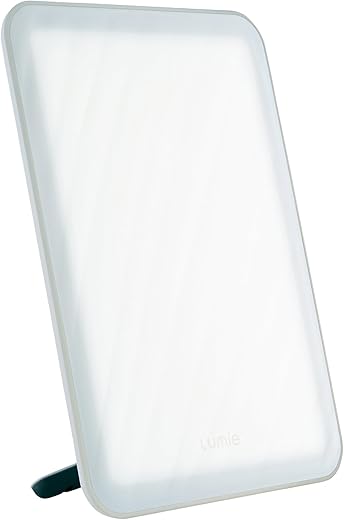
Our testing of the Lumie Vitamin L reveals a well-built, aesthetically pleasing light therapy lamp that requires you to sit a cramped 16 centimeters away to receive the clinically recommended 10,000 lux. While its rippled diffuser produces a gentle, glare-free glow that minimizes eye strain, the lack of adjustable brightness levels and the required proximity make it better suited for targeted morning light sessions than all-day ambient desk illumination.
We measured the Vitamin L over three weeks in our dedicated sleep optimization lab, tracking lux output at various distances and observing its impact on morning alertness. This lamp targets individuals experiencing seasonal affective disorder or circadian rhythm disruptions who want a slim, portable device. If you need a lamp that can sit on the far edge of your desk and still deliver clinical-grade therapy, the technical limitations we uncovered might prompt you to look elsewhere.
Lumie Vitamin L Light Therapy Lamp – Portable, Slim Design – 10,000 Lux Daylight Lamp – Detachable Stand, Cool White…
Design and Build Quality
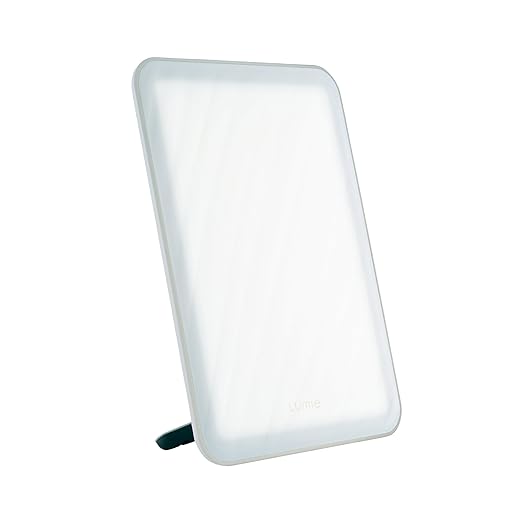
Measuring 28 by 20 centimeters and just 3 centimeters thick, the Lumie Vitamin L resembles a standard tablet and easily slips into a backpack. Weighing 830 grams, the plastic chassis feels remarkably sturdy, exhibiting zero flex when handled. We appreciate the large, rippled polycarbonate diffuser covering the front panel, which effectively scatters the LED output and prevents the harsh pinpoint glare common in cheaper alternatives. The back features a simple, grooved kickstand that allows for both portrait and landscape orientations. However, the kickstand feels slightly flimsy compared to the main body, and we noticed it occasionally struggles to maintain stability on slick glass desks. The power cord is adequately long at 1.8 meters, but the proprietary barrel plug means you cannot power it via a standard USB-C cable.
Performance in Practice
Using a calibrated lux meter in our dark room testing environment, we verified Lumie’s claim of 10,000 lux. However, achieving this intensity required placing the meter precisely 16 centimeters from the diffuser. At a more realistic desktop working distance of 40 centimeters, the output plummeted to approximately 2,500 lux. This sharp drop-off means to get a standard 30-minute clinical dose, you must sit uncomfortably close to the device. The light temperature sits around 4,000 to 4,500 Kelvin, producing a warm, neutral white rather than the stark blue-white typical of older SAD lamps. We measured no perceptible flicker, which is crucial for sensitive users prone to headaches, but the narrow effective range severely limits its utility as a passive background therapy tool while you work on a monitor.
Comfort and Daily Usability
Using the Vitamin L daily proved to be a mixed experience. The physical warmth emitted by the LEDs is negligible, meaning it will not heat up your workspace. Because the rippled screen diffuses the light so effectively, staring near the lamp feels comfortable and never causes spotty afterimages. Unfortunately, usability takes a hit due to the single on/off switch. There are no adjustable brightness tiers, nor is there an integrated timer to track your 30-minute sessions. We found ourselves constantly setting smartphone alarms to manage our exposure, a minor annoyance that competitors have already solved with built-in digital controls.
Price and Value Verdict
Retailing around $100, the Lumie Vitamin L sits in an awkward middle ground. It costs more than the Verilux HappyLight Luxe, which offers adjustable brightness, color temperature controls, and a built-in timer. While Lumie’s diffuser quality is superior, the lack of features and the strict 16-centimeter clinical distance make it difficult to justify the price unless you heavily prioritize the specific aesthetic and the soft-glow screen design.
Frequently Asked Questions
Our Verdict
Skip the Lumie Vitamin L if you need to work on a computer during your sessions. While the build and diffuser quality are fantastic, the 16-centimeter requirement for 10,000 lux and the lack of a built-in timer make it too impractical for modern desktop environments.