LifeStraw Personal Water Filter Review
A drinking straw that turns a stagnant puddle into safe water without a single battery, pump, or chemical tablet.
The LifeStraw has been the default answer to “what water filter should I pack” for over a decade, and the core pitch hasn’t changed: suck water through a hollow-fiber membrane and it comes out clean on the other end. This review covers how it performs on trail, in a bug out bag, and as a backup source when a pump filter clogs or a purifier’s batteries die — plus where it genuinely falls short.
- No moving parts, no failure points There’s no pump, no batteries, and no chemicals — just a hollow-fiber membrane you drink through directly, which means nothing to charge or replace before a trip.
- 4,000 liters is a real number, not marketing fluff At roughly 1,000 gallons of rated lifespan, a single LifeStraw can outlast several backpacking seasons of casual use before the membrane clogs enough to matter.
- It filters, it doesn't purify The 0.2 micron membrane strips bacteria and parasites but doesn’t remove viruses, so it’s suited to backcountry streams and lakes, not questionable tap water abroad.
- Straw-only design has a real tradeoff You have to get your mouth to the water source or a container, which works great streamside but is awkward for filling bottles or cooking pots without an adapter.
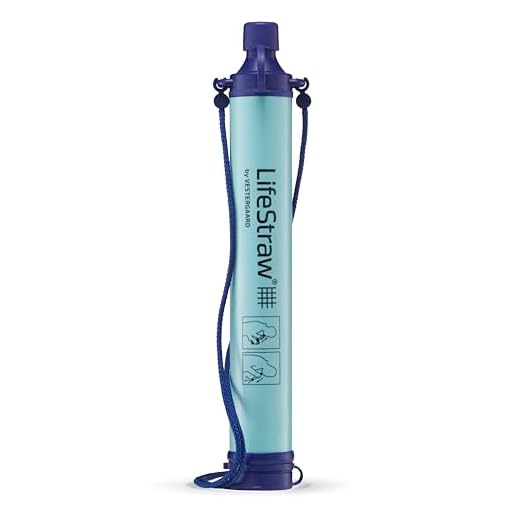
A 2-stage microfiltration membrane strips 99.999999% of bacteria and 99.999% of parasites like Giardia, plus microplastics down to 1 micron, from 4,000 liters of water.
| Filter Type | Hollow-fiber microfiltration membrane |
| Bacteria Removal | 99.999999% (E. coli, Salmonella) |
| Parasite Removal | 99.999% (Giardia, Cryptosporidium) |
| Microplastic Filtration | Down to 1 micron |
| Turbidity Reduction | Down to 0.2 microns |
| Rated Lifespan | 4,000 liters (1,000 gallons) |
| Testing Standards | US EPA, NSF, ASTM protocols |
| Material | BPA-free plastic housing |
| Power Source | None required (gravity/suction only) |
| Virus Removal | Not rated for viruses |
- Filters down to 0.2 microns, catching bacteria, parasites, and microplastics in one pass
- No batteries, pumps, or replacement cartridges to manage before a trip
- 4,000 liter rated lifespan means one unit covers years of intermittent camping and hiking use
- Lab-verified against actual EPA/NSF/ASTM protocols, not just internal marketing claims
- Small and light enough to live permanently in a bug out bag or glovebox without a second thought
- Doesn’t remove viruses, so it’s not a full purifier for international travel with unclear water sources
- Straw-only format means no easy way to pre-filter water into a bottle or cooking pot without buying an adapter
- Suction gets noticeably harder as the membrane approaches its lifespan, with no built-in indicator telling you how much is left
- Backwashing (blowing air back through it) is required periodically and easy to forget until flow slows down
Choosing the right outdoor wifi extender
-
Filtration method and micron ratingHighPersonal water filters use hollow-fiber membranes, activated carbon, or chemical purification, each with different micron ratings and target contaminants.Look forA stated micron rating (0.2 microns or smaller) plus specific pathogen removal percentages, not vague 'purifies water' languageAvoidProducts that only list generic marketing claims without lab-tested percentages for bacteria and parasites
-
Virus protectionHighMicrofiltration removes bacteria and protozoa but most straw-style filters can't physically block viruses, which are smaller than the membrane pores.Look forExplicit virus removal claims (often via added iodine matrix or electroadsorption) if you'll use it outside North America/EuropeAvoidAssuming any 'water filter' automatically means 'water purifier' — the terms aren't interchangeable
-
Rated filter lifespanMediumFilter life is usually stated in liters or gallons before flow drops off or the membrane needs replacing.Look forA specific liter/gallon rating backed by third-party lab testing, ideally 1,000+ liters for multi-season useAvoidFilters with no stated lifespan, or ones needing frequent (expensive) cartridge swaps
-
Flow method and formatMediumOptions range from straw-style direct-suck filters to squeeze bags, gravity systems, and pump filters, each trading speed for convenience.Look forA format that matches your actual use case — straw for solo emergency backup, squeeze/gravity for filling bottles or cooking water for a groupAvoidBuying a straw-only filter if you regularly need to fill multiple containers or cook for a group
-
Weight and packabilityLowUltralight backpackers and emergency-kit builders both care about how much space and weight a filter adds.Look forSub-3-ounce weight and a compact housing that fits in a hip belt pocket or small kit pouchAvoidBulky pump systems if the primary use case is backup or emergency rather than primary daily filtration
Common questions
Does the LifeStraw remove viruses?
No. It’s rated for bacteria (99.999999%), parasites (99.999%), and microplastics down to 1 micron, but the hollow-fiber membrane doesn’t catch viruses. That’s fine for backcountry streams and lakes in most of North America and Europe, but it’s not a substitute for a purifier when traveling somewhere with contaminated municipal water.
How long does one LifeStraw actually last?
It’s rated for 4,000 liters, roughly 1,000 gallons, which for most weekend hikers and campers translates to years of use before the membrane clogs enough to affect flow. Heavy sediment in the water source (silty ponds vs. clear streams) will shorten that lifespan faster than the rating implies.
Can I fill a water bottle with it, or do I have to drink directly from the source?
The base LifeStraw is designed for direct suction from a source or a container you’ve already scooped water into — it doesn’t push water into a bottle on its own. If you need to fill containers hands-free, look at LifeStraw’s bottle or gravity-fed versions instead of the straw.
How do I know when the filter is wearing out?
There’s no gauge — you’ll notice suction getting progressively harder as the membrane approaches its rated lifespan or gets clogged with sediment. Backwashing it periodically (blowing air back through the mouthpiece to clear trapped particles) restores flow and extends usable life between replacements.
The LifeStraw does exactly what it claims: strip bacteria, parasites, and microplastics out of sketchy backcountry water with zero setup and zero maintenance beyond an occasional backwash. It’s not a full purifier and it’s not built for filling multiple containers quickly, but as a lightweight, no-fail backup for hikers, campers, and emergency kits, it earns its spot on the gear list.
- Lab-verified filtration to 0.2 microns against EPA, NSF, and ASTM protocols, not just marketing claims
- 4,000 liter rated lifespan makes it a multi-year investment rather than a single-trip consumable
- Zero batteries, pumps, or chemicals means it works exactly the same in year one and year three
For anyone who spends time on trail, near lakes and streams, or wants a reliable backup water source in a bug out bag, the LifeStraw is a low-cost, high-reliability pick. It’s not trying to replace a full purification system for international travel, and it shouldn’t be marketed as one — but for its actual use case, it delivers.