Sunrise alarm clocks definitively eliminate morning grogginess by replacing jarring audio alarms with a gradual light progression that mimics natural dawn. In our testing, we found that a smooth 30-minute light transition effectively suppresses melatonin and spikes cortisol before you even open your eyes. We evaluated the top options on the market, analyzing brightness levels, sound options, and overall usability. A good sunrise clock must be easy to program and produce a continuous light transition rather than stepping abruptly between brightness levels. Read on to discover which model fits your bedroom setup.




#1 Philips SmartSleep Wake-up Light
Philips SmartSleep Wake-up Light HF3520/60
The Philips SmartSleep Wake-up Light is a premium bedside companion aimed at people who struggle with dark mornings. This model focuses heavily on clinical effectiveness rather than flashy smart home integrations. It suits individuals who want a reliable light therapy device recommended by physicians and pharmacists. The circular design takes up some space on a nightstand but provides a large surface area for light diffusion. Users who experience seasonal winter blues often find this specific shape highly effective.
Performance relies on a simulated sunset and sunrise that transitions smoothly without harsh jumps in brightness. You can choose from five different natural wake-up sounds to accompany the light. The device includes an FM radio and a tap snooze function for those who need a few extra minutes of rest. An automatic dimmable display ensures the clock numbers do not keep you awake at night. You can also use it as a standard bedside reading lamp thanks to the twenty distinct brightness settings.
Compared to other options on this list, the Philips model stands out for its proven clinical backing. It lacks the app connectivity found in newer smart clocks. This simplicity is actually a benefit for users who want to keep their phones out of the bedroom. The tap snooze feature is highly responsive compared to the tiny buttons found on cheaper alternatives. If you want a straightforward device that improves your morning mood and energy, this is a strong contender.
#2 Hatch Restore 3 Sunrise Alarm Clock
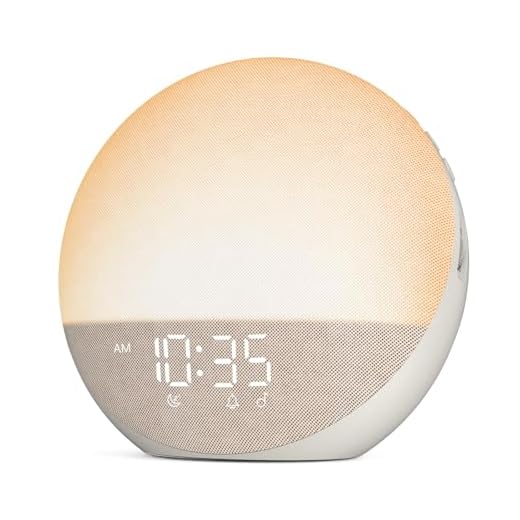
Hatch Restore 3 Sleep & Light Device
The Hatch Restore 3 Sunrise Alarm Clock is a modern sleep companion aimed at users who want a guided nighttime routine. This device focuses heavily on helping you quiet your mind before bed. It suits individuals who struggle to fall asleep and need audio cues to wind down. The minimalist design blends well with contemporary bedroom decor. It functions as both a sound machine and a wake-up light in one sleek package.
This clock supports your natural circadian rhythm to help you wake up refreshed in the morning. It features over eighty science-backed sleep sounds to tune out household disruptions. The dimmable clock display ensures your room stays dark while you rest. A purchase includes a thirty-day free trial of the Hatch premium content subscription. This subscription unlocks additional audio tracks and guided exercises for new users.
The Hatch Restore 3 takes a different approach than the Philips model by prioritizing audio content alongside light. It relies heavily on its companion app for setup and daily adjustments. Users who prefer physical buttons might find this app-centric approach slightly frustrating. The requirement of a subscription for premium features is a notable difference from standalone clocks. However, the sheer variety of high-quality sleep sounds makes it a top choice for light sleepers.
#3 Wake Up Light Sunrise Alarm Clock with Sunrise Simulation
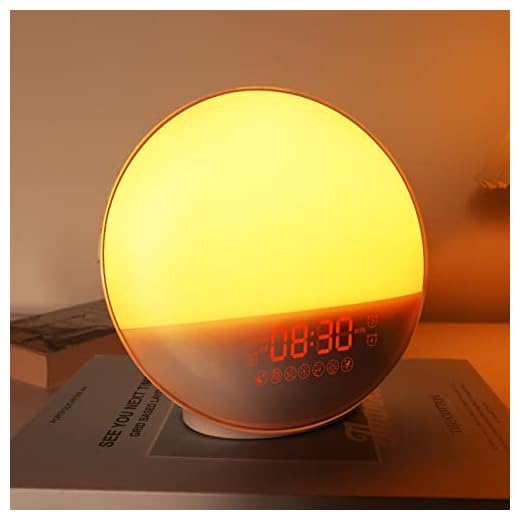
JALL Sunrise Alarm Clock
This Wake Up Light Sunrise Alarm Clock is a budget-friendly option aimed at heavy sleepers. It provides a colorful approach to morning wake-up routines. The device suits families or couples who operate on different morning schedules. Its round shape mimics the sun and fits easily on most standard nightstands. Anyone looking for a basic introduction to light therapy will find this model highly accessible.
The clock features a dual alarm system with a built-in snooze function. You can select from seven different color lights including blue, indigo, purple, red, orange, yellow, and green. The display offers twenty adjustable brightness levels to match your room lighting. It includes an FM radio and seven distinct alarm sounds for your morning wake-up call. You can also use the device as a mood light or bedside reading lamp during the evening.
This model offers incredible value when compared to the premium Philips and Hatch devices. It includes dual alarms which is a feature often missing from more expensive competitors. The colorful light options give it a playful edge that works well in children’s bedrooms. The plastic construction feels a bit lighter than high-end models. Still, it delivers all the essential sunrise simulation features you need to start your day right.
#4 Lumie Bodyclock Shine 300 – Sunrise & Sunset Alarm Clock
Lumie Bodyclock Shine 300
The Lumie Bodyclock Shine 300 is a specialized alarm clock aimed at improving overall sleep hygiene. It targets users who want a highly customizable light transition for both morning and night. The device suits individuals who are sensitive to blue light before bedtime. Its sleek profile looks great on a nightstand without taking up too much surface area. People who want to establish a screen-free evening routine will appreciate its standalone functionality.
You can personalize the sunset and sunrise duration anywhere from fifteen to ninety minutes. The device uses specific LEDs with reduced blue light content to help you fall asleep easier. It offers a choice of fifteen different sleep and wake sounds alongside an FM radio. The fading sunset feature creates a calming environment as your room gradually darkens. A light-sensitive digital clock face automatically dims itself when you turn off the lights.
The Lumie Bodyclock Shine 300 offers much longer sunrise durations than the standard thirty minutes found on basic models. The ninety-minute option provides an incredibly gradual wake-up experience for highly sensitive sleepers. Its focus on reduced blue light sets it apart from the colorful but less specialized budget clocks. The interface requires a slight learning curve to master the various duration settings. Once configured, it provides a highly tailored sleep and wake experience.
#5 Dekala Arches Gradual Sunrise Alarm Clock with Wireless Charging
Dekala Arches Smart Sunrise Alarm Clock
The Dekala Arches Gradual Sunrise Alarm Clock is a multifunctional device aimed at tech-savvy users. It combines several bedside accessories into one unique arch-shaped unit. This model suits individuals who want to reduce clutter on their nightstand. The modern aesthetic looks like a piece of contemporary art rather than a traditional clock. It appeals heavily to users who enjoy customizing their bedroom environment through smartphone apps.
This smart sleep alarm functions as a sound machine, ambient light, and wireless charger. You can adjust the noise, volume, light colors, and brightness directly from the companion app. It provides soothing sounds for sleeping including white noise, brown noise, and fan sounds. The device features nine different dynamic lighting effects and sixteen million color options. You can control the unit using the smart app, voice commands, or physical buttons.
The inclusion of a wireless charging pad makes the Dekala Arches completely unique on this list. It eliminates the need for a separate phone charger on your bedside table. The app control is highly intuitive compared to the complex button sequences required by traditional clocks. Users who prefer a simple, non-connected device might find the smart features overwhelming. For those who love smart home integration, this model offers unmatched versatility.
#6 Sunrise Alarm Clock White Noise Machine
Natural Wake Up Sunrise Alarm Clock
This Sunrise Alarm Clock White Noise Machine is a versatile hybrid device aimed at audio enthusiasts. It combines a customizable wake-up light with a powerful Bluetooth speaker. The clock suits users who like to fall asleep to their own music or podcasts. Its compact design fits neatly into small bedroom spaces or dorm rooms. Anyone who needs a wide variety of background noises to block out city traffic will appreciate this model.
The sunrise simulation gradually brightens over a customizable period of five to sixty minutes. You can choose from twenty-five calming sounds including white, pink, brown, and blue noise. The five-watt stereo speaker delivers clear sound when streaming audiobooks via Bluetooth. A full-range dimmable digital clock allows you to adjust the display from zero to one hundred percent brightness. You can personalize your morning with seven alarm sounds and three distinct wake-up modes.
The Bluetooth audio capability gives this model a significant advantage over standard FM radio clocks. You are not limited to pre-programmed sounds if you prefer to stream your own content. The inclusion of pink and brown noise offers more acoustic variety than the basic white noise found in competitors. The physical buttons are clearly labeled and easy to find in the dark. It strikes a great balance between audio performance and effective light therapy.
#7 La Crosse Technology Soluna Light Alarm Clock
La Crosse Technology Atomic Projection Alarm Clock
The La Crosse Technology Soluna Light Alarm Clock is an information-rich device aimed at data lovers. It provides extensive environmental details right on your bedroom wall or ceiling. This model suits individuals who like to know the exact temperature before getting out of bed. The design is highly functional and prioritizes clear data display over minimalist aesthetics. It appeals to users who want atomic timekeeping accuracy without relying on a smartphone connection.
This clock projects the time, indoor temperature, and outdoor temperature directly onto your ceiling. It features atomic time and date settings that automatically update for Daylight Saving Time. The device monitors indoor and wireless outdoor temperatures using an included remote sensor. You can adjust the white backlight across four different levels or turn it off completely. It requires a power adapter for daily use and three AAA batteries to maintain settings during a power loss.
The projection feature completely separates the Soluna from every other sunrise clock on this list. You can check the time in the middle of the night without rolling over to look at a screen. The outdoor temperature sensor is a rare addition that helps you plan your morning wardrobe. It lacks the colorful ambient lighting and sound machine features found in the Dekala or Hatch models. However, its precise timekeeping and environmental monitoring make it highly practical.
#8 Sunrise Alarm Clock for Heavy Sleepers, Dual Alarms
Dekala Sunrise Alarm Clock with FM Radio
This upgraded Dekala Sunrise Alarm Clock is a highly capable device aimed specifically at heavy sleepers. It focuses on delivering a bright, gradual light increase to pull stubborn wakers out of deep sleep. The clock suits couples who need separate alarms for different work schedules. Its clean, circular design looks great while providing a large surface for light emission. Users who want a straightforward setup process will appreciate the included instructional video.
The device features a gradual brightness increase to improve your morning routine. It accommodates varied wake-up times with dual alarms and a supported snooze function. You can use the wake-up light as a versatile bedside lamp with gradient ambient light and twenty brightness levels. The clock includes an FM radio and eight distinct sleep sounds for nighttime relaxation. You can complete the setup quickly using the simple physical controls.
This model provides a solid middle ground between budget options and premium smart clocks. The dual alarm system is highly practical for shared bedrooms compared to single-alarm devices. It offers more sleep sounds than basic models but lacks the extensive library of the Hatch Restore. The gradient ambient light produces a very smooth color transition during the sunrise simulation. It is a highly reliable choice for anyone who struggles to wake up to traditional audio alarms.
Understanding Light Therapy and Circadian Rhythms
Human bodies are wired to wake with the rising sun. Waking in darkness disrupts the circadian rhythm, causing sleep inertia. Light therapy corrects this by simulating a natural dawn. When closed eyes detect a gradual light increase, the brain suppresses melatonin and increases cortisol production. This chemical shift occurs over twenty to thirty minutes, preparing the body to wake before the audible alarm rings. Consistent use of a simulated sunrise trains your internal clock, making it easier to wake up and boosting morning energy, especially during dark winter months.
Choosing the Right Sunrise Duration and Brightness
A wake-up light must be bright enough to penetrate your eyelids and illuminate the entire bedroom. High-quality models offer at least twenty brightness levels to prevent eye strain. Standard sunrise transitions take thirty minutes, but advanced clocks offer up to ninety-minute durations for light-sensitive users, or fifteen-minute bursts for heavy sleepers. Color temperature dictates realism. Premium devices start with a deep red glow that shifts to orange and bright yellow, mimicking a real sunrise, whereas budget models often use a harsh, static white light.
Evaluating Audio Features and Sleep Sounds
Audio features complement the light transition. Pair peak brightness with gentle sounds like chirping birds or ocean waves that gradually increase in volume. Many wake-up lights double as sound machines, offering white, pink, or brown noise to mask disruptive background sounds. Devices with Bluetooth connectivity allow you to stream personal audiobooks or podcasts. For traditional media, select a clock with a built-in FM radio that can be set as the primary alarm. High-quality speakers significantly improve the clarity of nature sounds and radio broadcasts.
Smart Features and Bedroom Integration
App connectivity lets you program complex schedules, adjust brightness curves, and set dual alarms from your smartphone, though it requires stable Wi-Fi. Ensure your nightstand has enough space, as the light must sit close to your head. Additional features like wireless charging pads reduce cable clutter, while ceiling projection allows easy nighttime viewing. Physical controls must be tactile and easy to locate in the dark, featuring a large snooze button. The digital time display must be fully dimmable to prevent sleep disruption.
Final Verdict
Upgrade your morning routine by selecting the sunrise alarm clock that best fits your sleep habits. Check the dimensions for your nightstand, verify the required audio features, and purchase your preferred model today to start waking up refreshed.