Winter months often bring shorter days and a noticeable drop in natural sunlight. Many people find themselves struggling with low energy and mood shifts as the seasons change. A light therapy lamp can help bridge the gap by providing bright indoor illumination that mimics the sun. Choosing the right model depends heavily on your daily routine and available space. We tested several popular options to see how they fit into a typical home or office setup.
Some users need a large panel that bathes their entire desk in light. Others prefer a compact unit that easily packs away into a laptop bag. We looked closely at brightness levels, adjustability, and overall footprint to determine which lamps actually deliver on their promises. Our testing process focused on real-world usability rather than just reading spec sheets. Read on to see how these three distinct models compare in daily practice.

The Northern Light Technologies Boxelite takes a traditional approach to light therapy. It features a large metal frame housing powerful fluorescent bulbs. The manufacturer claims it delivers 10,000 lux at a generous distance. This distance is quite helpful compared to smaller units that require you to sit uncomfortably close. The glare-free diffuse light covers a wide area to ensure your eyes receive adequate exposure.
During our testing, the sheer size of the light surface stood out immediately. You do not have to keep your head perfectly still to stay within the effective light range. The fluorescent bulbs provide a comfortable glow that does not feel harsh during early morning sessions. It takes up a significant amount of desk space, so you will need a dedicated spot for it. The metal construction feels heavy and stable on a flat surface.
Compared to modern LED alternatives, the Boxelite feels a bit bulky. However, the wide coverage area makes it highly effective for users who move around while reading or eating breakfast. It lacks the adjustable color temperatures found on newer models. If you have the room and want a clinically tested design with a 30-year track record, this lamp remains a solid choice. Just be prepared to sacrifice some tabletop real estate.
Verilux HappyLight Luxe
The Verilux HappyLight Luxe offers a highly customizable light therapy experience in a modern package. It uses UV-free LED technology to deliver up to 10,000 lux of full-spectrum light. The ultra-thin tablet design makes it incredibly easy to move from the kitchen counter to your home office. It includes a detachable stand and a wall mount option for flexible placement. The controls are located right on the front panel for quick adjustments.
What sets this model apart is the ability to tweak the light output to your exact preferences. You get four different brightness levels and three color temperature options. A built-in countdown timer helps you track your daily sessions without needing a separate clock. The light is bright but comfortable, and the adjustable settings allow you to start with a softer glow before ramping up to full intensity. The slim profile means it easily slips into a drawer when not in use.
This lamp is a stark contrast to the bulky Boxelite. It trades the massive surface area for portability and smart features. You do have to sit closer to the screen to get the full 10,000 lux effect. The HappyLight Luxe works exceptionally well for people who want a sleek device that blends into a modern workspace. It provides a highly personalized daily dose of sunshine without dominating your desk.
Circadian Optics Lumos 2.0 Desk Lamp
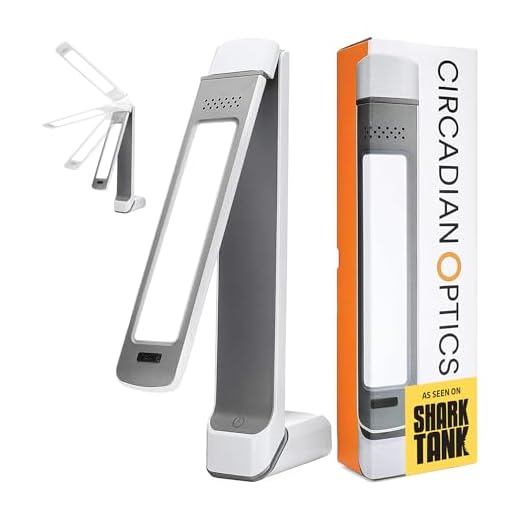
The Circadian Optics Lumos 2.0 takes a completely different physical approach to light therapy. Instead of a flat panel, this desk lamp features a tall and highly adjustable design. The light panel rotates 270 degrees to help you find the exact right angle for your face. It folds down to a very compact size of 1.75 by 2.25 inches at the base. The LED technology is rated for 50,000 hours of use.
We found the hyper-adjustable arm incredibly useful during our morning routines. You can position the light source above your laptop screen so it shines down naturally. It offers three distinct brightness levels to match your comfort needs. Despite the small footprint, it still provides the recommended 10,000 lux of brightness. The base is small enough to fit on even the most cluttered workstations.
This model directly addresses the space issues associated with traditional light therapy boxes. While the Verilux is flat like a tablet, the Lumos 2.0 functions more like a traditional reading lamp. The light source is smaller, meaning you have to be mindful of how you position it relative to your eyes. It comes with a four-year warranty and USA-based customer service for added peace of mind. This is a highly practical option for tight office cubicles.
Verdict
Choosing the right light therapy lamp comes down to your available space and preferred features. The Northern Light Technologies Boxelite remains a top choice for those who want maximum coverage and do not mind a larger footprint. Its wide surface area allows you to move around freely while still receiving an effective dose of light. If you have a dedicated spot for it, the classic fluorescent design is highly reliable.
For users who value modern aesthetics and portability, the Verilux HappyLight Luxe offers excellent customization with its adjustable colors and timers. It easily packs away and looks great on any desk. Meanwhile, the Circadian Optics Lumos 2.0 provides a unique, highly adjustable arm that saves maximum desk space. Both LED options deliver bright light in a much smaller package than traditional boxes.
Frequently Asked Questions
How long should I use a light therapy lamp each day?
Most experts recommend using a 10,000 lux lamp for 20 to 30 minutes each morning. You should sit close enough to the light based on the manufacturer instructions. It is generally best to avoid using them late in the afternoon to prevent sleep disruptions.
Do I need to stare directly into the light?
You should never stare directly into the bulbs or LED panels. The light should enter your eyes indirectly while you read, eat, or work at your computer. Keep the lamp positioned at an angle to your face for the best results.
Are LED lamps better than fluorescent ones?
LED lamps are generally more compact and offer features like adjustable color temperatures. Fluorescent lamps often provide a larger surface area for wider light dispersion. Both types are effective as long as they deliver the recommended 10,000 lux intensity.