
Choosing the right SAD lamp often comes down to balancing clinical efficacy with modern design. The Carex Day-Light Classic Plus and the Lumie Vitamin L represent two distinct approaches to bright light therapy. Carex is an American standard known for its bulky, clinically-backed fluorescent panels, while Lumie is a British brand offering sleek, modern LED solutions. Both deliver the requisite 10,000 lux needed to reset your circadian rhythm and beat the winter blues, but they achieve this in vastly different form factors that dictate how you use them daily.
The Carex Day-Light is strictly for stationary users who prioritize therapeutic power above all else. Its large screen and downward-angled stand make it perfect for dedicated home offices where desk space isn’t a concern. Conversely, the Lumie Vitamin L is designed for minimalists and remote workers who need a highly portable, slim device. If you want a lamp that blends into a modern aesthetic and can easily slip into a tote bag, the Lumie is your go-to, provided you don’t mind sitting slightly closer to the light.
The Carex Day-Light wins for pure clinical effectiveness due to its large light box and downward projection, allowing you to sit a comfortable 12 inches away. The Lumie Vitamin L is the better choice for portability and modern desk setups, though you must sit within 8 inches to get the full 10,000 lux. Choose Carex for a permanent home office, and Lumie for travel and tight spaces.
Carex Day-Light Classic Plus
Carex Day-Light Classic Plus Sunlight Therapy Lamp – 10000 LUX Therapy Lamp at 12 Inches, LED Bright White Light with…
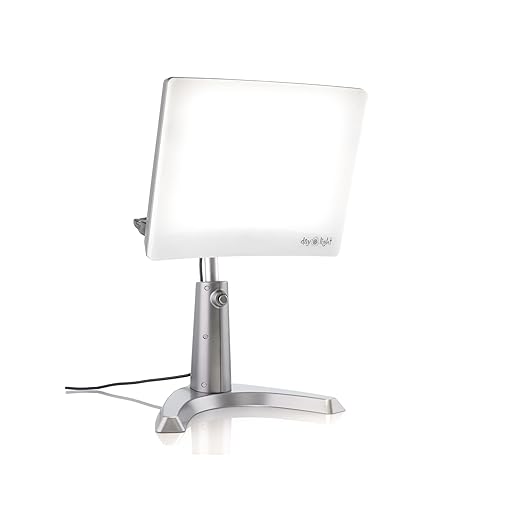
- 10,000 lux at 12-14 inches
- Adjustable height and downward angle
- UV-blocked fluorescent bulbs
- 15.5 x 17 x 3.25 inches footprint
Pros:
- Projects light downward mimicking the sun
- Allows a comfortable 12 to 14 inch sitting distance
- Massive light screen prevents glaring hot spots
Cons:
- Extremely bulky and outdated aesthetic
- Requires replacing fluorescent bulbs every few years
Lumie Vitamin L
Lumie Vitamin L Light Therapy Lamp – Portable, Slim Design – 10,000 Lux Daylight Lamp – Detachable Stand, Cool White…
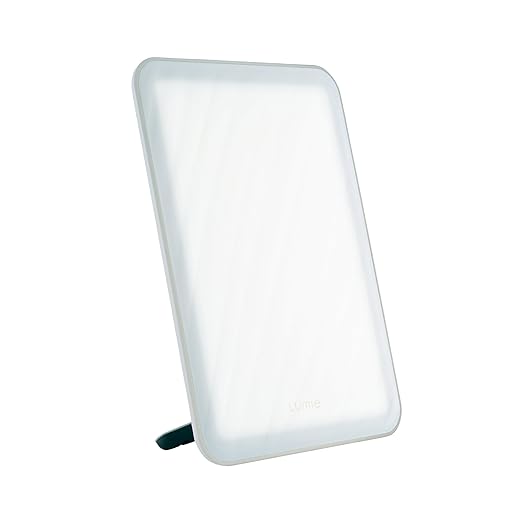
- 10,000 lux at 6.3 inches (16 cm)
- Slim energy-efficient LED technology
- Portrait or landscape orientation
- 11 x 7.9 x 1.2 inches footprint
Pros:
- Sleek, modern tablet-style design
- Highly portable and easy to store
- Rippled diffuser creates a soft, warm glow
Cons:
- Requires sitting awkwardly close for maximum lux
- Lacks a height-adjustable stand for downward projection
Clinical Efficacy and Lux Distance
When treating Seasonal Affective Disorder, distance matters just as much as brightness. Both lamps claim 10,000 lux, but the Carex Day-Light achieves this at a comfortable 12 to 14 inches. You can type or read naturally while absorbing the light. The Lumie Vitamin L requires you to sit about 6 to 8 inches away to receive the full 10,000 lux, which can feel uncomfortably close if you are trying to work simultaneously. For strict clinical efficacy and user comfort during treatment, the Carex heavily outshines the Lumie.
Design and Desk Footprint
Design is where the Lumie Vitamin L completely dominates. Resembling a modern tablet, the Lumie measures just over an inch thick and blends seamlessly into contemporary desk setups. It can sit in portrait or landscape modes and slips easily into a drawer when not in use. The Carex Day-Light is a massive, utilitarian eyesore by comparison. With its large pedestal and 15-inch wide screen, it demands significant, permanent real estate on your desk. If aesthetics or space constraints are a primary concern, the Lumie is the absolute winner.
Light Projection Angle Mechanics
Circadian experts recommend that light therapy devices project light downward toward the eyes, mimicking the natural position of the sun. The Carex Day-Light is specifically engineered for this, featuring a highly adjustable stand that easily hovers over your monitor and angles downward. The Lumie Vitamin L only comes with a simple kickstand. To achieve a downward angle, you must awkwardly prop it up on books or a shelf. Because it naturally sits lower on your desk and shines horizontally, the Lumie loses to Carex in optimal projection mechanics.
Light Source and Bulb Technology
The Lumie utilizes modern, energy-efficient LED technology behind a rippled diffuser. This means the bulbs will essentially last the lifetime of the device without needing replacement, and it produces a slightly warmer, visually pleasing glow. The Carex relies on older fluorescent tube technology. While fully UV-filtered and effective, these tubes degrade over time and typically require replacement every two to three years of daily winter use. Furthermore, fluorescent bulbs are fragile compared to durable LEDs. Lumie easily wins the technology category with its zero-maintenance, modern LED implementation.
Pricing and Overall Value
Both devices generally retail between $100 and $140, making them aggressively competitive in the mid-tier light therapy market. However, value depends entirely on your use case. The Carex offers superior therapeutic value, providing a clinical-grade setup that mimics multi-hundred-dollar clinical lamps for a fraction of the cost. The Lumie provides lifestyle value, offering genuine portability and durability without demanding extra desk space or maintenance. We consider it a tie on price, but Carex holds a slight edge in raw therapeutic value per dollar for serious SAD sufferers.
Frequently Asked Questions
Our Verdict
Buy the Carex Day-Light if you want the most clinically effective, comfortable light therapy setup for a permanent desk. Buy the Lumie Vitamin L if you prioritize aesthetics, portability, and zero-maintenance LED tech, provided you don’t mind sitting closer to the screen.