
Choosing the right circadian lighting often comes down to a battle between clinical efficacy and modern aesthetics. The Carex Day-Light Classic Plus represents the traditional standard in light therapy, offering a massive screen designed to meet strict medical criteria for treating Seasonal Affective Disorder. On the opposite end of the spectrum is the Circadian Optics Lumos 2.0, a sleek, minimalist device that reimagines light therapy for the modern office. Both deliver 10,000 lux, but their execution completely changes the daily user experience.
The Carex Day-Light is built for users who prioritize maximum therapeutic benefit and have a dedicated desk setup to accommodate its bulky frame. It requires no compromises on light spread or distance. Conversely, the Circadian Optics Lumos 2.0 is designed for digital workers, travelers, and minimalists who want to optimize their sleep and mood without turning their workspace into a clinic. It sacrifices a broad light field for extreme portability and a footprint that blends seamlessly alongside a laptop or monitor.
The Carex Day-Light wins for clinical efficacy and treating severe SAD due to its massive, glare-free light field that delivers 10,000 lux from a comfortable 14 inches away. The Circadian Optics Lumos 2.0 is the definitive winner for office workers and travelers who need a stylish, compact light therapy lamp for mild winter blues.
Carex Day-Light Classic Plus
Carex Day-Light Classic Plus Sunlight Therapy Lamp – 10000 LUX Therapy Lamp at 12 Inches, LED Bright White Light with…
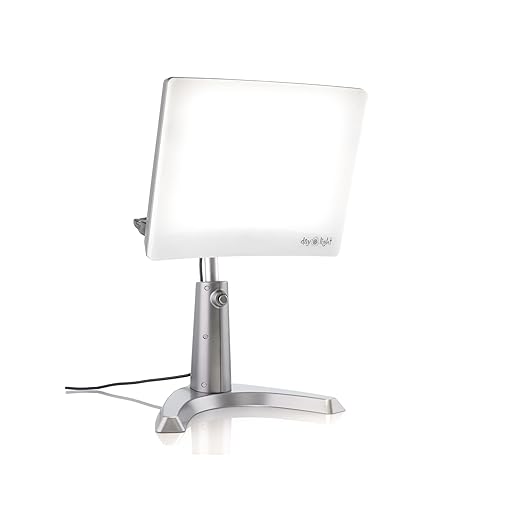
- 10,000 lux at 14 inches
- 4000K warm-white light
- 16 x 13 inch light screen
- Angle and height adjustable stand
Pros:
- Clinically recognized broad light field
- Effective at a comfortable 14-inch distance
- Glare-free diffusion screen protects eyes
Cons:
- Extremely bulky and heavy at over 9 lbs
- Utilitarian design looks like medical equipment
Circadian Optics Lumos 2.0
Circadian Optics Lumos 2.0 Light Therapy Desk Lamp | As Seen On Shark Tank | 10,000 LUX UV-Free Full-Spectrum LEDs |…

- 10,000 lux at 6 inches
- 5500K crisp white light
- 360-degree rotating light panel
- USB and AC power options
Pros:
- Ultra-compact base fits any desk
- Rotatable arm allows targeted lighting
- Highly portable for constant travel
Cons:
- Requires sitting unnaturally close for 10,000 lux
- Narrow light field limits head movement
Light Intensity and Clinical Treatment Range
Both lamps boast the standard 10,000 lux required for effective circadian lighting, but the delivery differs drastically. The Carex Day-Light achieves 10,000 lux at a comfortable 12 to 14 inches away from your face, allowing you to read or type normally. The Lumos 2.0 only hits 10,000 lux if you position it about 5 to 6 inches from your eyes, which feels intrusive during computer work. For true clinical efficacy without altering your posture, the Carex Day-Light is the undeniable winner.
Physical Footprint and Desk Space Requirements
Desk real estate is a premium for most digital workers. The Carex Day-Light is notoriously massive, featuring a heavy, bulky base that requires significant dedicated space on your desk or a side table. It completely dominates the workspace. Meanwhile, the Circadian Optics Lumos 2.0 is an absolute marvel of minimalism. Its small, weighted base fits into the tightest corners next to monitors, keyboards, or laptops. If you have a cluttered or small desk, the Lumos 2.0 is the only viable option here.
Light Adjustability and Safe Viewing Angles
To be effective, circadian lighting must enter the eyes from above to simulate natural sunlight. The Carex Day-Light excels here, featuring a highly adjustable stand that projects light downwards at the perfect clinical angle, completely eliminating eye strain and glare. The Lumos 2.0 features a clever 360-degree rotating hinge, allowing you to twist the light bar to your preferred angle. However, because it sits lower to the desk, it often shines upwards into the eyes. Carex takes the win for biologically accurate light positioning.
Aesthetics and Overall Build Quality Construction
The visual contrast between these two devices is striking. The Carex Day-Light looks like a piece of hospital equipment from the 1990s, with cheap-feeling gray plastics and an aggressively utilitarian vibe that you will want to hide when guests arrive. The Circadian Optics Lumos 2.0, however, is a sleek, modern statement piece. Its slim profile, clean lines, and contemporary finish look perfectly at home next to premium tech gear like Apple monitors. For design-conscious buyers, the Lumos 2.0 wins flawlessly.
Device Portability and Remote Travel Ease
Sleep optimization should not stop when you leave home. The Carex Day-Light weighs over nine pounds and does not disassemble easily, making it strictly a stationary device. Taking it on a trip is entirely out of the question. The Circadian Optics Lumos 2.0 is incredibly lightweight, folds down into a compact stick, and can be powered via USB. You can easily slip it into a laptop bag or carry-on luggage. For frequent travelers and digital nomads, the Lumos 2.0 is unmatched.
Frequently Asked Questions
Our Verdict
Choose the Carex Day-Light for serious SAD treatment; its broad, comfortable light field justifies the bulky footprint. Buy the Circadian Optics Lumos 2.0 if you need a stylish, portable circadian lighting solution for mild sleep optimization at a crowded office desk.