Teaching toddlers when it's actually morning
A 5am wake-up isn't a discipline problem, it's a communication problem, and an OK-to-wake clock is how you fix it without a single argument.
The gap between a decent toddler clock and a bad one comes down to whether the wake signal is unmistakable in a dark room at 5:45am and whether the light or color change is gentle enough not to jolt a half-asleep kid. Skip anything with a screen bright enough to feel like a phone notification, and skip anything where the icons are too subtle for a groggy three-year-old to read without your help.
- Color beats numbers for toddlers under 4 Kids who can’t read a clock face yet can absolutely learn ‘green means get up’ or ‘moon means stay in bed’ faster than any digit display.
- Non-ticking movement matters more than people expect A cheap wall clock’s tick is loud enough in a quiet nursery to keep a light sleeper cycling awake; sweep-movement clocks solve this for a few dollars more.
- App control is a real feature, not a gimmick Being able to nudge wake time 15 minutes later from your phone during a nap regression or time change saves you from physically reprogramming a clock at 6am.
- Wall clocks and OK-to-wake alarm clocks solve different problems A wall clock teaches time-telling as a skill; an OK-to-wake alarm clock manages the actual wake-up behavior. Most families end up wanting one of each.




Best Overall: Hatch Baby Sound Machine, Night Light (Putty)
A color-changing Time-to-Rise light teaches toddlers when it’s OK to get up, paired with app-controlled routines, nursery stories, and all-night white
- Time-to-Rise light change is easy for toddlers to learn since it’s the same device already tied to their bedtime sound
- App lets you adjust wake time and routines remotely without walking into the room
- Doubles as a white noise machine, so you’re not running two devices in the nursery
- Nursery stories and sound library give you a bedtime wind-down tool beyond just the wake alarm
- Requires Wi-Fi setup, which is one more thing to troubleshoot if your router or app has a bad night
- Costs more than a dedicated OK-to-wake clock or wall clock
- App dependency means a phone software update or account hiccup can occasionally get in the way of quick changes
Best Value: Netzu Alarm Clock for Kids
Simple moon-and-sun icons teach toddlers when it’s still bedtime versus OK to rise, backed by 10 RGB colors and battery-saved settings during outages.
- Moon and sun icons are about as simple as an OK-to-wake signal gets, which matters for kids under 3
- 10 color options let you match the clock to a kid’s room or let them pick their own wake color
- Built-in nap timer is genuinely useful for toddlers still on a midday nap schedule
- Battery backup keeps settings during a power outage, so you’re not reprogramming after every blip
- Buttons and menu feel like a budget clock, not as intuitive as the app-controlled options
- Speaker for alarm tones is on the quieter, thinner side
- Pink color scheme won’t suit every kid’s room without a case swap or sticker cover
Runner Up: DreamSky Small Digital Alarm Clock
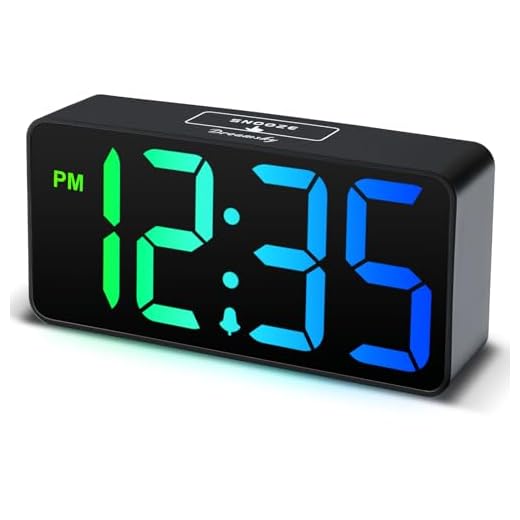
Jumbo 2-inch LED digits with a brightness dimmer keep toddlers from squinting at a too-bright display or missing a too-dim one during a 3am wake check
- 2-inch digits are readable across a dark room, which most compact alarm clocks skimp on
- Dimmer control means you’re not choosing between blinding-bright or unreadably-dim
- Small footprint fits tight nightstands or shelves in a toddler room without crowding other gear
- RGB color options give you a basic version of the wake-time color cue without the OK-to-wake branding markup
- Not a purpose-built OK-to-wake clock, so there’s no dedicated moon/sun or color-coded wake mode
- Buttons are small enough that a toddler can’t operate it independently
- Alarm tones are basic beeps, nothing as pleasant as app-based clocks offer
Best for Bedroom Decor: Kids Dinosaur Wall Clock
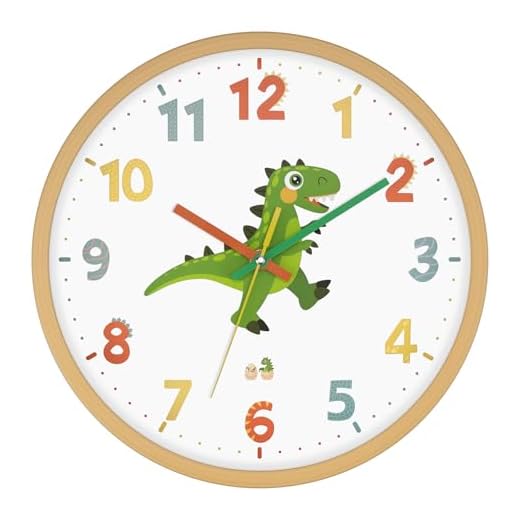
A non-ticking sweep movement won’t disturb toddler sleep, while oversized numbers and bold hands teach kids to spot wake time on their own.
- Sweep movement means zero ticking noise, so it won’t be the thing keeping a light-sleeping toddler up
- Oversized numbers and bold hands make it realistic for a toddler to start recognizing wake time on their own
- Dinosaur theme doubles as room decor instead of looking like a clinical bedside device
- No cords or app setup, just batteries and a nail on the wall
- Analog-only, so it doesn’t do anything active like alarms, colors, or sound
- Reading an analog face is a harder skill for toddlers than reading a color cue or digital number
- Battery access panel on some units is a little stiff to open for quick swaps
Best Budget: Roymnie Wall Clock for Kids Learning
Color-coded hours and a silent sweep second hand let budget-minded parents teach toddlers to read wake time without ticking noise disrupting sleep.
- Color-coded hours give toddlers a visual anchor point for associating certain hand positions with wake time
- Silent sweep hand means no ticking noise anywhere near the crib or bed
- 8-inch size is easy to read from across a small room without being oversized for the wall
- Priced low enough to buy one for every kid’s room without a second thought
- No alarm, light, or sound function at all, purely a visual teaching tool
- Color-coding helps with time-telling more than it helps with an explicit wake-time rule
- Plastic build and printed face feel exactly as budget as the price suggests
Best for Teaching Wake Times: Learning Resources Big Time Student Clock
A hidden gear mechanism links the hour hand to the minute hand, so toddlers see exactly how the two connect when practicing their wake-up time.
- Linked gear mechanism lets kids turn the minute hand and watch the hour hand move correctly, which most toy clocks fake
- Large, clear face makes it easy to physically set to a ‘wake-up time’ and compare against the real clock
- Sturdy build holds up to a toddler grabbing and spinning the hands repeatedly
- Reinforces the exact concept an OK-to-wake device is teaching, just in a hands-on, non-electronic format
- Officially rated for ages 5+, so younger toddlers will need help and won’t grasp it independently yet
- Not a functional clock for the room, it’s a teaching tool that needs to sit alongside a real clock
- No wake-time automation of any kind, it’s purely educational
Side-by-side comparison
|
Best Overall
Hatch Baby Sound Machine, Night Light (Putty) | Sl
|
Best Value
Netzu Alarm Clock for Kids, OK to Wake Clock with
|
Runner Up
DreamSky Small Digital Alarm Clock for Bedroom, RG
|
Best for Bedroom Decor
Kids Dinosaur Wall Clock for Kids Room Bedroom Non
|
Best Budget
Roymnie Wall Clock for Kids Learning Battery Opera
|
Best for Teaching Wake Times
Learning Resources Big Time Student Clock, Teachin
|
|
|---|---|---|---|---|---|---|
|
|
|
|
|
|
|
|
| Device Type | Smart night light + sound machine | OK-to-wake alarm clock | Digital alarm clock | Wall clock | Wall clock | Teaching clock |
| Wake Signal | Color-changing light | Moon/sun icon + color | Dimmable digits/color | Silent sweep hands | Color-coded hour markers | Manual hand demonstration |
| App Control | Yes | No | No | No | No | No |
| Ticking Noise | Silent (electronic) | Silent (electronic) | Silent (electronic) | Silent sweep | Silent sweep | Silent (manual) |
| Best Age Range | 1-5 years | 2-6 years | 3-8 years | 2-6 years | 3-7 years | 5+ years |
| Price | $79.99 | $18.99 | $19.99 | $22.99 | $9.99 | $13.49 |
| BUY NOW | BUY NOW | BUY NOW | BUY NOW | BUY NOW | BUY NOW |
What to look for in Toddler OK-to-Wake Clocks
At what age can a toddler actually understand an OK-to-wake clock?
Most toddlers start grasping a simple color or icon cue around 2 to 2.5 years old, though some catch on earlier if you consistently narrate it during the routine. Full time-telling comprehension, like reading an analog face, usually doesn’t click until closer to 5, which is why teaching clocks like the Learning Resources model are rated for older kids.
Do OK-to-wake clocks actually stop early wake-ups?
They don’t stop a toddler from waking up early, but they do stop the immediate call for you or the wander into your room. The clock gives the toddler a rule to follow independently, which over a few weeks of consistent enforcement tends to shift wake-up behavior even if it doesn’t change biological wake time.
Is a wall clock or an alarm clock the better first purchase?
An alarm clock with a wake signal like the Hatch or Netzu is the better first purchase because it actively manages the behavior. A wall clock is a good second purchase once your toddler is a bit older and ready to start connecting the wake signal to an actual time on a clock face.
Do these clocks need to be within arm's reach of the crib or bed?
Keep alarm clocks and night lights within easy sightline but out of reach of a crib, since cords and small buttons aren’t ideal near an infant or young toddler. Wall clocks should be mounted high enough to be readable from bed but safely out of reach entirely, especially in a toddler’s climbing years.
The bottom line
- Hatch Baby Sound Machine — the most complete system, worth the price if you want app control and don't want three separate devices in the nursery
- Netzu Alarm Clock — the best dedicated OK-to-wake clock for the money, no app needed
- DreamSky Digital Alarm Clock — buy this if readability in the dark matters more than a dedicated wake-signal feature
- Kids Dinosaur Wall Clock — pick this when you want the room to look good while quietly reinforcing wake-time habits
- Roymnie Wall Clock — the cheapest way to get a silent, color-coded clock into the room
- Learning Resources Big Time Student Clock — add this once your toddler is old enough to start actually learning why the wake-time rule works
The Hatch is the one to buy if you want a single device handling sound, light, and wake routines without extra hardware, and the Netzu is the one to buy if you just need the OK-to-wake function done well and cheaply. Everything else in this list solves a more specific problem, whether that’s decor, budget, readability, or actually teaching the concept of time.