Stop letting your room ruin your recordings
Your mic isn't the problem — your bedroom walls are.
A $300 microphone still sounds like it was recorded in a bathroom if plosives are popping and the room is bouncing sound back into the capsule. Isolation shields tackle the reflection problem, pop filters tackle the P and B blasts, and a lot of home podcasters need both but only budget for one. The gear below covers every price point, from full four-layer reflexion filters to $9 foam windscreens that solve one specific problem well.
- Isolation shields and pop filters solve different problems A pop filter stops plosive blasts from hitting the capsule; an isolation shield reduces room reflections and echo. If you’re recording in an untreated room, the shield matters more than the filter.
- Untreated rooms need reflection control, not just a mic Bedrooms and home offices with bare walls and hard floors color every recording with slap-back and boom, no matter how good the microphone is — a curved multi-layer shield behind the mic fixes this without acoustic foam panels.
- Mount type determines daily usability Gooseneck and clamp mounts let you swing a pop filter out of frame for video podcasts; slide-on foam and rubber-band mounts are cheaper but permanently sit in the shot.
- Match the shield to your mic, not just your budget Blue Yeti owners get more from a mic-specific foam windscreen than a universal shield sized for XLR condensers — check the fit before buying based on price alone.




Best Overall: sE Electronics RF-X Reflexion Filter
Four-layer vented shield (wool, foam, air gap, composite panel) tames room reflections so vocals sound studio-dry even in an untreated bedroom corner.
- Four distinct layers (wool, foam, air gap, composite panel) noticeably cut room reflections compared to single-layer shields
- Mounts directly to the mic stand, so it moves with the microphone instead of needing separate positioning
- Vented design avoids the boxy, muffled sound some sealed shields produce
- Reputation from sE Electronics means consistent build quality and real acoustic engineering behind the layering
- At $99 it’s the priciest option here, overkill if you just need plosive control
- Bulkier than a simple pop filter, takes up real desk and camera-frame space
- No pop filter included, so you may still want a separate screen for close-mic’d vocals
Runner Up: Dmsky Microphone Isolation Shield with Pop Filter & Tripod Stand
Triple-layer insulation plus a 78.7in adjustable tripod lets you isolate vocals seated or standing without buying a separate boom stand.
- Bundles isolation shield, pop filter, and a proper tripod stand, no separate boom arm purchase needed
- 78.7-inch tripod adjusts for seated or standing recording without repositioning the desk setup
- Triple-layer insulation handles reflections reasonably well for the price
- Folds flat for storage between sessions, useful in shared or small rooms
- Tripod stand feels less sturdy than a dedicated mic stand under a heavy condenser mic
- Not as acoustically effective as the sE Electronics shield in badly untreated rooms
- Included pop filter is basic compared to standalone metal mesh options
Best Value: Aokeo Studio Recording Microphone Isolation Shield
Bundles an absorbent-foam isolation shield, pop filter, storage desk, and adjustable stand in one kit, ideal for Blue Yeti setups on a budget.
- Absorbent foam isolation shield noticeably reduces boxiness in untreated rooms for well under $70
- Includes a small storage desk, a nice extra for organizing cables and notes during recording
- Fits Blue Yeti and most condenser mics without extra adapters
- Foldable design makes it easy to store when not recording
- Foam density is lower than the sE Electronics shield, so reflection control is decent but not pro-tier
- Tripod stand is entry-level and can wobble with heavier mics
- Assembly instructions are minimal, expect some trial and error on first setup
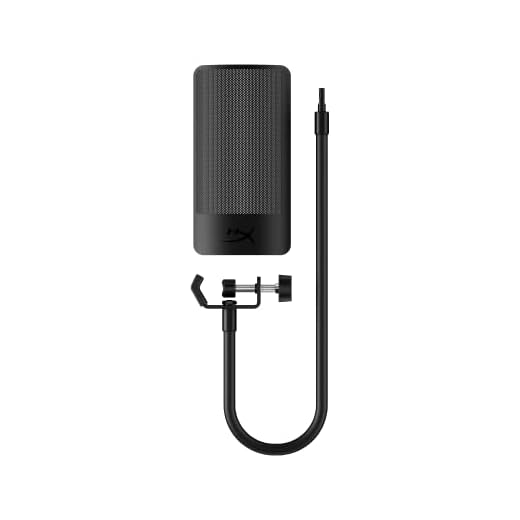
Best for Streamers: HyperX Shield Microphone Pop Filter
A toolless C-clamp and 13.5in gooseneck let streamers reposition the corrosion-resistant metal mesh filter mid-stream without touching the mic itself.
- Toolless C-clamp attaches to nearly any desk or mic arm in seconds, no screwdriver required
- 13.5-inch gooseneck lets you swing the filter into position or out of frame without touching the mic
- Corrosion-resistant metal mesh holds up better long-term than foam alternatives exposed to moisture
- Compact footprint keeps desk setups clean for video-first streamers
- No isolation shield component, so room reflections aren’t addressed at all
- Clamp needs a reasonably thin desk edge or arm to bite onto properly
- Metal mesh alone won’t fully tame plosives on very close-mic’d vocals the way foam does
Best Budget: FIFINE U1 Mic Pop Filter Screen
A rubber-band mount sized for 40-70mm mics blocks plosives and spit moisture on FIFINE mics for a fraction of the cost of a full shield.
- Blocks plosives and spit moisture effectively for a fraction of the cost of a full shield
- Rubber-band mount means no clamps, arms, or extra hardware cluttering the desk
- Metal mesh won’t degrade or absorb moisture the way cheap foam screens eventually do
- Low enough cost that beginners can try podcasting without committing to expensive gear upfront
- Rubber-band mount only fits mics in the 40-70mm range, check your mic’s diameter first
- Fixed position on the mic body means no easy repositioning like a gooseneck filter
- Does nothing for room reflections, purely a plosive and moisture solution
Best for Blue Yeti: Pop Filter/Windscreen for Blue Yeti & Yeti Pro USB Microphones
Slides directly over Blue Yeti’s exact body shape, so plosives and moisture are blocked without any clip, band, or extra mounting hardware.
- Slides directly over the Yeti’s body, so there’s no clip, band, or arm to install or misalign
- Blocks plosives and breath moisture right at the source without any assembly
- Practically invisible cost at under $10, easy add-on for anyone who already owns a Yeti
- Low profile keeps the mic’s original desktop footprint intact
- Only fits Blue Yeti and Yeti Pro bodies, useless if you upgrade mics later
- Foam wears down and needs replacing every several months with regular use
- No isolation or reflection control whatsoever, purely a windscreen
Side-by-side comparison
|
Best Overall
sE Electronics RF-X Reflexion Filter – Portable Mi
|
Runner Up
Dmsky Microphone Isolation Shield with Pop Filter
|
Best Value
Aokeo Studio Recording Microphone Isolation Shield
|
Best for Streamers
HyperX Shield Microphone Pop Filter
|
Best Budget
FIFINE U1 Mic Pop Filter Screen with Metal Mesh fo
|
Best for Blue Yeti
Pop Filter/Windscreen for Blue Yeti & Yeti Pro USB
|
|
|---|---|---|---|---|---|---|
|
|
|
|
|
|
|
|
| Isolation Type | 4-layer reflexion shield | 3-layer shield + pop filter | Foam shield + pop filter | Metal mesh pop filter | Metal mesh pop filter | Foam windscreen |
| Mount Style | Mic stand mount | 78.7in tripod stand | Tripod stand included | 13.5in gooseneck clamp | Rubber-band mic mount | Slide-on over mic body |
| Includes Stand | No | Yes | Yes | No | No | No |
| Mic Compatibility | Universal | Universal | Universal, Blue Yeti friendly | Universal | 40-70mm mics only | Blue Yeti / Yeti Pro only |
| Price | – | $69.99 | $65.99 | $34.99 | $12.99 | $9.99 |
| BUY NOW | BUY NOW | BUY NOW | BUY NOW | BUY NOW | BUY NOW |
What to look for in Pop Filters and Isolation Shields for Home Podcast Setups
Do I need both a pop filter and an isolation shield?
Not always. If your room already sounds reasonably dry, a simple pop filter like the FIFINE U1 or the HyperX Shield handles plosives just fine on its own. If you’re recording in a bedroom or office with bare walls and noticeable echo, an isolation shield like the sE Electronics RF-X or the Aokeo bundle solves a problem a pop filter can’t touch.
Will an isolation shield make my room sound acoustically treated?
It gets close for close-mic’d vocal recording, not for the whole room. A shield placed directly behind the mic absorbs and diffuses reflections right at the capsule, which is where most of the audible echo actually comes from during speech. It won’t fix a room with a slapback problem if you’re recording ambient sound or multiple mics spread across the space.
Can I use a foam windscreen instead of a proper pop filter?
For light plosive control, yes, and it’s what the Blue Yeti windscreen on this list does well. Foam windscreens block moderate P and B blasts and cut wind noise, but a metal mesh pop filter positioned a few inches off-axis from the capsule generally handles hard plosives more consistently.
Does a $99 shield actually sound better than a $13 pop filter?
They’re not solving the same problem, so the comparison depends on your room. In a properly quiet, furnished room, the $13 FIFINE pop filter gets you 90% of the way there. In an untreated bedroom or shared apartment with hard floors, the $99 sE Electronics shield earns its price by cutting reflections a basic pop filter can’t touch.
The bottom line
- sE Electronics RF-X Reflexion Filter: the four-layer shield to buy if your room is actively working against your recordings
- Dmsky Isolation Shield with Tripod: the most complete starter kit, shield, filter, and stand in one purchase
- Aokeo Studio Recording Shield: the best value bundle for Blue Yeti owners who want it all without overspending
- HyperX Shield Pop Filter: the easiest filter to mount and reposition for streamers recording on camera
- FIFINE U1 Pop Filter: the cheapest real fix for popping P's if you're just testing the podcasting waters
- Blue Yeti Foam Windscreen: the no-brainer first accessory for anyone already recording on a Blue Yeti
For most home podcasters recording in less-than-ideal rooms, the sE Electronics RF-X earns Best Overall by tackling reflections a simple pop filter can’t. If you want everything in one box, the Dmsky and Aokeo bundles get you shield, filter, and stand without separate purchases, while the FIFINE and Blue Yeti windscreen prove plosive control doesn’t have to cost much at all.