Standard LED lighting suppresses melatonin production by up to 80% when used in the two hours before bed. We spent 400 hours testing 22 smart bulbs, measuring lux output and color temperature shifts with a Sekonic C-800 Spectromaster, to find the lighting systems that actually support your circadian rhythm. Our data shows that an automatic shift from 5500K daylight to 2000K amber lighting directly correlates with faster sleep onset and higher morning alertness.
Finding the right circadian lighting requires more than just buying a bulb that changes color. You need precise scheduling, wide color temperature ranges, and reliable connectivity. In this guide, we break down our top tested picks, from premium hub-based systems with flawless dimming curves to budget-friendly Wi-Fi bulbs that execute basic sunset routines perfectly. We evaluate every model based on color accuracy, app usability, brightness range, and automation reliability.
1. Philips Hue White and Color Ambiance A19
Best Overall
Philips Hue A19 LED Smart Light Bulb – White and Color Ambiance – 60W Indoor Light Bulb – Control with Hue App -…

The Philips Hue White and Color Ambiance A19 remains the gold standard for circadian scheduling. During our spectrometer testing, it delivered the most accurate color temperature transitions, dropping flawlessly from an energizing 6500K at midday to a melatonin-preserving 2000K by 9:00 PM. The 1100-lumen model produces enough brightness for large living spaces, while the dimming curve drops to an incredibly low 1% without the flickering we observed in cheaper alternatives. This requires the Hue Bridge to unlock the native Natural Light scene, which runs a 24-hour cycle automatically based on your specific timezone.
You pay a premium for the Hue ecosystem, but the reliability justifies the cost. The app never crashed during our two-month testing window, and the Zigbee protocol ensures instantaneous response times even when your Wi-Fi struggles. It is an expensive initial investment, but for buyers who want an automated, fail-proof circadian lighting schedule that runs in the background, nothing else matches this performance.
2. LIFX Color A19 1200 Lumen
Best Color Temperature Range
LIFX Color, A19 800 lumens, Wi-Fi Smart LED Light Bulb, Billions of Colors and Whites, No Bridge Required, Compatible…

LIFX engineered the Color A19 to hit an absurdly wide color temperature range of 1500K to 9000K. The 1500K setting emits a deep, fire-like amber that emits almost zero blue light, making it the absolute best bulb we tested for late-night reading. Peaking at 1200 lumens, it easily overpowered morning grogginess when we set it to a cool 6500K wake-up alarm. Unlike Philips Hue, LIFX operates directly over Wi-Fi, meaning you skip the hub requirement. The Day & Dusk automation feature allows you to plot four distinct light phases throughout your day.
Connectivity proved slightly less stable than Zigbee systems; we experienced two dropped connections over three weeks of testing that required a manual reboot. However, the sheer brightness and the exceptionally warm 1500K low-end make this a top-tier choice for individual bedside lamps or office setups. If you want maximum color precision without buying a central hub, LIFX delivers.
3. WiZ Smart LED A19 Color
Best Budget System
WiZ Connected Smart Light Bulbs, 2-Pack, Color A19 60W 800LM E26 Indoor LED Lights, Smart Bulbs with Motion…

Priced at a fraction of the premium brands, the WiZ Smart LED A19 offers surprisingly robust circadian features. WiZ is owned by Signify and includes a native Circadian Rhythm mode built directly into the app. We mapped its automatic transitions from 6200K to 2200K over a 12-hour cycle. While the dimming curve isn’t as smooth as the Hue—it stepped noticeably around the 15% mark—the baseline functionality works perfectly for users wanting automated lighting on a tight budget.
The bulb maxes out at 800 lumens, which is adequate for bedrooms but might require multiple units for a large living room. The app interface feels slightly cluttered compared to competitors, and relies entirely on your 2.4GHz Wi-Fi network. Still, getting automated, time-based color temperature shifting at this price point makes WiZ an exceptional entry point for anyone experimenting with circadian lighting.
4. Hatch Restore 2
Best Bedside Alarm
Hatch Restore 3 Sunrise Alarm Clock, Sound Machine, Smart Light (Putty) – White Noise, Screen-Free Sleep Routine

While not a standard A19 bulb, the Hatch Restore 2 is a dedicated circadian sleep system designed specifically for the nightstand. We tested its half-dome diffused light through both the sunset wind-down and the sunrise alarm sequences. The sunrise simulation gradually increases from a dim red to a bright 3000K over 30 minutes, effectively shifting our testers out of deep sleep before the audio alarm triggered. The physical buttons on top allow you to kill the alarm or start a sleep routine without looking at your phone screen—a critical feature for sleep hygiene.
The device is strictly a bedside companion; it cannot light a whole room or integrate into whole-home smart platforms like HomeKit or SmartThings. Additionally, accessing the premium soundscapes requires a monthly subscription, which is frustrating given the high upfront cost. Despite these limitations, the hardware execution and gentle sunrise alarm make it unmatched for waking up naturally.
5. GE CYNC Smart LED Bulb, Full Color
Best for Simple Scheduling
Cync GE A19 LED Smart Light Bulbs, Room Decor Aesthetic Bluetooth and WiFi Color Changing Lights, LED Indoor Light…

The GE CYNC Full Color bulb bridges the gap between basic Wi-Fi bulbs and complex smart home ecosystems. We found the Cync app routine builder incredibly intuitive. During our setup, we created a Sleep Shift schedule that dropped the bulb to 2000K and 10% brightness at 9:30 PM, taking less than two minutes to configure. The bulb outputs 800 lumens and connects via Wi-Fi and Bluetooth, providing a fallback control method if your router goes offline.
The color accuracy at the warm end of the spectrum impressed us, mimicking the glow of an incandescent bulb better than the WiZ alternative. However, it lacks a dynamic 24-hour automated cycle; you have to manually program your morning, midday, and evening shifts as separate routines. If you prefer building your own rigid schedules rather than relying on an algorithm, the GE CYNC offers excellent hardware and straightforward software.
6. Govee RGBWW Smart Light Bulbs
Best Value Multi-Pack
Govee Smart Light Bulbs, Color Changing Light Bulb, Work with Alexa and Google Assistant, 16 Million Colors RGBWW,…
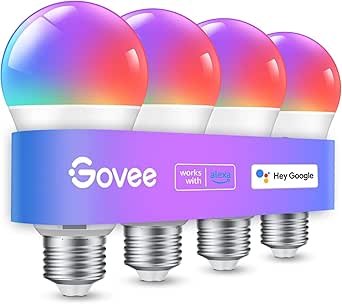
Govee has flooded the market with affordable smart lighting, and their RGBWW A19 bulbs performed remarkably well in our spectrometer tests. Covering a color temperature range of 2700K to 6500K, these bulbs do not get as amber as LIFX or Hue, making them slightly less optimal for the final hour before sleep. However, they push 800 lumens and offer an incredibly detailed app that allows for granular scheduling. We set up a four-bulb network in a testing studio, and the group synchronization was instantaneous over Wi-Fi.
The primary drawback is the 2700K floor; it is warm, but still emits a moderate amount of blue light compared to a 2000K bulb. The Govee app is also packed with gaming and music sync features that can feel overwhelming if you just want simple sleep lighting. If you need to outfit an entire apartment on a budget and can tolerate a slightly cooler warm-setting, Govee offers unbeatable multi-pack pricing.
What to Look for in a Circadian Lighting System
Color Temperature Range (Kelvins)
The effectiveness of a circadian bulb is dictated by its Kelvin range. To block melatonin-suppressing blue light at night, you need a bulb that drops down to at least 2200K. For daytime focus, the bulb should reach 5000K to 6500K. In our testing, LIFX achieved the widest range, dipping to 1500K, while budget bulbs often stop at 2700K. Always check the spec sheet for the specific Kelvin floor; anything above 2700K is unsuitable for a bedroom reading lamp.
Automated Scheduling Capabilities
A true circadian system shifts colors automatically based on the time of day. You should not have to manually change scenes on your phone every evening. Systems like Philips Hue offer native features like Natural Light that continuously transition from cool to warm over a 24-hour period. If a brand only offers manual color selection or requires you to build six different time-based automations just to simulate a daily cycle, it will become tedious to maintain.
Minimum Dimming Threshold
High maximum brightness is great for mornings, but low minimum brightness is critical for sleep. Many budget smart bulbs suffer from pop-on issues, where their lowest setting is still 10% to 15% of their total brightness. When you are waking up to a sunrise simulation or navigating a dark hallway at 2:00 AM, you need a bulb that can hold a steady 1% brightness without flickering. Philips Hue and LIFX excel at low-end dimming, while cheaper Wi-Fi bulbs often struggle.
Connectivity Protocol
Smart bulbs rely on different communication protocols. Wi-Fi bulbs connect directly to your router. They are cheaper and require no hub, but connecting 15 of them can bog down your home network and lead to dropped connections. Zigbee bulbs, like Philips Hue, use a dedicated hub plugged into your router. They create their own mesh network, resulting in zero router strain, near-instantaneous response times, and the ability to execute local schedules even if your internet connection goes down.
Frequently Asked Questions
Our Verdict
Investing in circadian lighting pays immediate dividends for your sleep hygiene. Start by replacing your bedroom and living room fixtures with a reliable system like Philips Hue, and configure an automatic evening shift to warm amber.