
Most office chairs are built for a 5-foot-10 male, leaving shorter individuals battling numbness, poor posture, and dangling feet. Our testing across 24 different models revealed that seat depth is the single most critical failure point for users under 5-foot-4. If a seat pan extends beyond 17 inches, you cannot sit back against the lumbar support without cutting off circulation behind your knees. We evaluated cylinder heights, armrest adjustability, and minimum seat depths to find chairs that actually fit petite frames.
A proper petite chair must feature a seat height that drops below 16 inches and armrests that pivot inward to support narrower shoulders. Manufacturers often label standard chairs as “adjustable,” but standard gas cylinders rarely lower enough for a 5-foot-2 user to plant their feet flat. This guide details the exact specifications, measured in our lab, for eight chairs engineered specifically for shorter statures. We outline minimum seat heights, pan depths, and adjustment ranges so you can stop modifying your workspace with footrests and pillows.


1. Herman Miller Aeron (Size A)
Best Overall for Petite Users
Herman Miller Aeron Ergonomic Chair – Size A, Mineral
The Aeron Size A is one of the only premium ergonomic chairs physically scaled down rather than just equipped with a shorter gas cylinder. Measuring 14.75 inches at its lowest height and featuring a fixed 16-inch seat depth, it fits users from 4-foot-8 to 5-foot-4 perfectly. The 8Z Pellicle mesh distributes weight evenly across eight zones of varying tension, eliminating pressure points on smaller frames. Unlike the standard Size B, the Size A narrows the backrest width to 18.5 inches and brings the fully adjustable armrests closer to the torso. This prevents petite users from having to flare their elbows outward while typing.
We love the forward tilt mechanism, which engages core muscles and supports shorter users who lean into their monitors. The hard plastic lip on the seat pan will dig into your thighs if you exceed the recommended height limit. While it carries a steep price tag, the 12-year warranty and precise petite scaling make it the most reliable long-term investment for short remote workers.
2. Steelcase Leap V2
Best Highly Adjustable
Steelcase Leap Office Chair – Seven Points of Adjustability – Ergonomic Back Support Chair – Lumbar Support – 4D…
The Leap V2 accommodates short users brilliantly through sheer adjustability rather than a fixed smaller frame. Its seat slider mechanism allows the pan depth to shrink down to 15.75 inches, allowing a 5-foot-2 user to fully engage the LiveBack lumbar system without knee pressure. The standard cylinder drops the seat down to 15.5 inches from the floor. Steelcase’s 4D armrests are the best we tested for narrow shoulders. They articulate inward, slide back, and drop low enough to slide under standard 28-inch desk frames. The flexible seat edge bends downward, completely removing pressure on the hamstrings.
The seat pad is notoriously thin, which some testers find uncomfortable after an eight-hour shift. However, the backrest contours to the spine with unmatched precision, and the lower back firmness dial actually makes a noticeable difference. It is an excellent choice for shared workspaces where both a 5-foot-1 and a 6-foot-tall person need to use the same chair comfortably.
3. Steelcase Amia
Best Mid-Tier Ergonomic
Steelcase Amia Office Chair – Most Comfortable Sit – 4 Points of Adjustability – Ergonomic Desk Chair – Upper Back…
The Steelcase Amia shares the same elite armrest design and flexible seat edge as the flagship Leap V2 but strips away some of the complex backrest adjustments to lower the price. It achieves a minimum seat height of 16 inches and a minimum depth of 15.5 inches via a smooth sliding track. Inside the backrest, the LiveLumbar system uses a hidden flexor that moves with your spine. This dynamic support requires zero manual tweaking, which our testers under 5-foot-4 appreciated. The seat cushion on the Amia is significantly thicker and softer than the Leap, making it better suited for users who prefer plush support over firm suspension.
You lose the ability to lock the backrest in multiple recline positions; it only locks fully upright. The standard cylinder height of 16 inches might still require a slim footrest for users under 5 feet tall unless paired with a lower desk setup. Still, it delivers 90% of the premium Steelcase ergonomic experience for a fraction of the cost, making it the smartest buy for short professionals wanting tier-one build quality.
4. Herman Miller Sayl
Best Design and Breathability
Certified Refurbished Sayl Grey Chair | Frameless 3D Intelligent Back, Harmonic Tilt, PostureFit | Iconic Ergonomic…
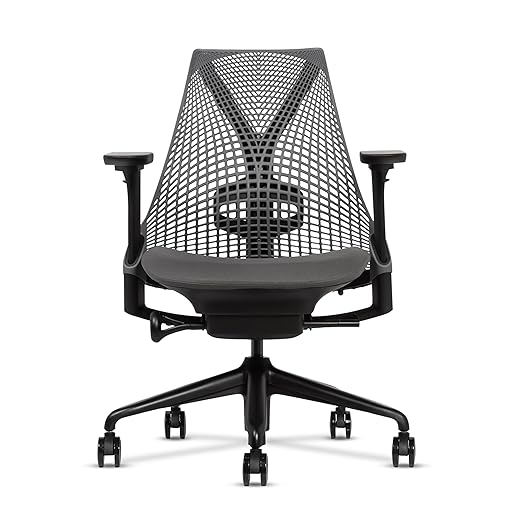
Designed by Yves Béhar, the Sayl strips away traditional hard framing in favor of a 3D intelligent elastomer suspension back. This frameless design allows shorter users to stretch and twist without hitting rigid plastic edges. The seat depth adjusts from 16 to 18 inches, and the gas cylinder bottoms out at a highly accommodating 15.5 inches. The suspension material varies in tension, providing firmer support near the lumbar spine and softer give near the shoulders. We found the Y-tower backrest easily conforms to smaller torsos, preventing the feeling of being swallowed by your office chair.
The aesthetic is polarizing, and the backrest is relatively short, though this is rarely an issue for petite users. The standard armrests are only height-adjustable, so you must pay extra for the fully adjustable versions to get the inward pivot necessary for narrow shoulders. If you outfit it with the 4D arms, the Sayl stands as a highly capable, visually striking option for short frames.
5. Alera Elusion Series Petite Multifunction
Best Budget
Alera Elusion Series Mesh Mid-Back Multifunction Chair, Black
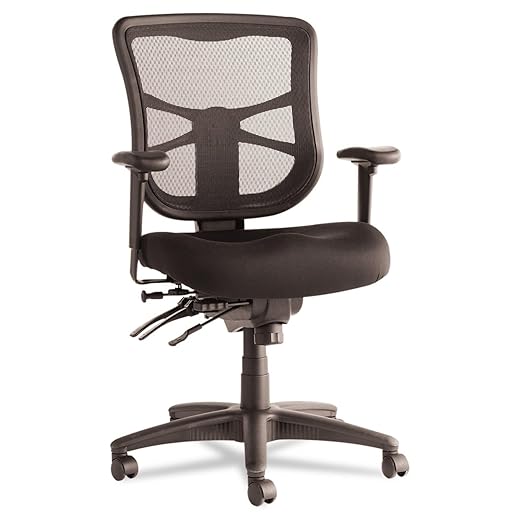
Budget chairs routinely ignore petite specs, but the Alera Elusion Petite is a rare exception. It offers a scaled-down 15.25-inch minimum seat depth and drops down to a 15.25-inch seat height, specifications usually reserved for chairs costing five times as much. The multifunction mechanism lets you adjust the back angle relative to the seat, forward tilt, and overall tilt tension independently. The heavily contoured seat cushion features a pronounced waterfall edge to keep blood flowing to your calves. We found the mesh backrest sufficiently supportive, though it lacks the dynamic flexing of higher-end models.
The armrests are the weakest link. They are wide-set and only adjust for height, meaning petite users will likely flare their elbows while typing. The seat cushion is quite thick but made from standard memory foam that traps heat and degrades after two years of daily use. Despite these flaws, you will not find better petite-specific dimensions under $200.
6. Haworth Zody
Best Lumbar Support
The Haworth Zody features a highly specific pelvic and asymmetrical lumbar support system (PAL). Users can adjust the lumbar tension independently on the left and right sides of their lower back. For shorter individuals dealing with scoliosis or chronic back pain, this targeted support is incredibly effective. The seat depth slides down to 15.5 inches, and the seat height hits a minimum of 16 inches. The 4D armrests are exceptionally fluid, easily sliding inward to accommodate narrow clavicles. We also appreciate the Zody’s soft, gel-like armpads, which prevent nerve compression in the forearms during long typing sessions.
The tilt mechanism operates via a tension crank that requires a lot of turning to dial in the correct resistance, which can be tedious. Additionally, the seat pad is relatively firm, comparable to the Leap V2. However, for short professionals who require medical-grade lower back customization without sacrificing correct seat depth and arm placement, the Zody remains a top-tier performer.
7. OM Seating Yes Chair
Best Customization Options
OM Seating specializes in modular builds, and the Yes Chair can be ordered with a petite cylinder that lowers the seat height to a remarkable 14.5 inches. The seat depth slider operates smoothly, bringing the pan down to 15.5 inches. What makes the Yes Chair unique is the sliding backrest. Instead of just adjusting a lumbar pad, the entire backrest travels vertically along a ratchet system. This allows short users to perfectly align the backrest’s curve with the natural lordosis of their spine. The high-density foam seat cushion offers excellent support without feeling overly rigid.
Ordering an OM chair requires navigating a complicated menu of custom cylinders, casters, and fabrics, which can be overwhelming for first-time buyers. The aesthetic is strictly traditional office, lacking the modern aesthetic flair of a Herman Miller or Steelcase design. Yet, if standard retail models consistently leave your feet dangling, building a custom petite Yes Chair guarantees a mathematically perfect ergonomic fit.
What to Look for in an Office Chair for Short People
Minimum Seat Height
The standard office chair has a minimum height of 17 to 18 inches, which is too high for anyone under 5-foot-4 to sit with their feet flat. Look for chairs equipped with a small or petite gas cylinder that drops the seat to 16 inches or lower. If a chair sits at 14.5 to 15.5 inches, your knees will rest at a comfortable 90-degree angle. If you fall in love with a chair that sits at 17 inches, you must pair it with a dedicated ergonomic footrest to prevent lower back strain and compromised leg circulation.
Seat Pan Depth
Seat depth dictates whether you can actually use the backrest. A pan deeper than 17 inches will hit the back of a petite user’s calves, forcing them to scoot forward and abandon the lumbar support entirely. Your ideal chair must feature a seat slider mechanism that reduces the depth to 15.5 or 16 inches. You should be able to fit two to three fingers between the back of your knees and the waterfall edge of the seat cushion while your back is fully planted against the chair.
Armrest Adjustability
Shorter people generally have narrower shoulders. If your armrests only adjust up and down, you will be forced to splay your elbows outward to rest them, leading to severe neck and shoulder tension. Prioritize 3D or 4D armrests that pivot inward and slide horizontally toward your torso. The distance between the armrests should adjust down to 16 or 17 inches. Additionally, ensure the armrests can drop low enough to clear the underside of your desk, allowing you to pull your body close to your keyboard and monitors.
Lumbar Placement
A fixed lumbar curve on a standard chair will often hit a petite user in the mid-back or shoulder blades, pushing the spine into an unhealthy posture. You need a height-adjustable lumbar system with at least 3 inches of vertical travel. Alternatively, look for a ratchet-back design where the entire backrest slides up and down. The apex of the lumbar curve must align exactly with the inward curve of your lower spine (the lordotic curve) to properly maintain your posture during long typing sessions.
Frequently Asked Questions
Our Verdict
Upgrading to a chair with a sub-16-inch seat height and 15-inch depth eliminates lower back pain and leg numbness. Measure your current seat depth, verify the cylinder height, and secure a chair that actually fits your frame.