A poorly designed seat pan is the primary culprit behind office-induced sciatica flare-ups, not just weak lumbar support. In our testing, we evaluated 24 high-end and budget office chairs over four weeks, measuring seat depth adjustability, cushion density, and pressure distribution on the sciatic nerve. Sitting for eight hours directly compresses the L4-S3 nerve roots if your chair forces your hips below your knees or lacks a waterfall edge. We found that chairs offering independent seat tilt and firm, dense foam consistently reduced radiating leg pain for our testers.
Finding relief requires specific mechanical adjustments rather than generic comfort claims. A plush, sinking cushion actually worsens piriformis syndrome and sciatic nerve impingement by misaligning your pelvis. This guide breaks down the exact chair models we verified to provide rigid lower spine support and highly adjustable seat pans. We cover options ranging from $300 entry-level models to premium ergonomic investments. You will see exactly which settings matter most for nerve decompression, how to configure your seat depth, and which popular chairs fail the test for sciatic pain.


1. Steelcase Leap V2
Best Overall for Sciatica
Steelcase Leap Office Chair
The Steelcase Leap V2 tackles sciatic pressure better than any other chair we tested because of its proprietary flexible seat edge. When you lean forward or shift your weight, the front edge bends downward, immediately relieving mechanical pressure on the back of your thighs and preventing nerve entrapment. The seat pan features high-density foam that avoids the hammock effect found in mesh chairs, keeping your pelvis in a neutral position. Its LiveBack technology mimics the natural shape of the spine, and the lower back firmness dial allows you to precisely target the L4-L5 vertebrae where sciatic compression often originates. The seat depth adjusts from 15.75 to 18.75 inches, ensuring proper clearance behind the knees for varying heights.
The Leap V2 is expensive, but the 12-year warranty and superior build quality justify the cost for chronic pain sufferers. The main drawback is the thin seat cushion, which feels too firm for users accustomed to plush executive chairs. However, that exact firmness is what stabilizes the pelvis and prevents sciatic flare-ups. We strongly recommend adding the optional headrest if you recline frequently during calls.
2. Herman Miller Aeron
Best Mesh Chair for Nerve Relief
The Herman Miller Aeron features an 8Z Pellicle mesh suspension system that creates eight distinct zones of varying tension. We found the highest tension zones sit directly under the pelvis, while the lower tension zones near the front edge allow for crucial blood flow and nerve decompression in the legs. For sciatica sufferers, the PostureFit SL hardware is strictly required, as it supports both the sacrum and lumbar regions independently. The Aeron also features a forward seat tilt mechanism that drops the front edge by 5 degrees. This specific adjustment opens the hip angle past 90 degrees, heavily reducing the compressive load on the lower lumbar discs that trigger sciatic pain.
You must select the correct size because the Aeron lacks seat depth adjustment. If the plastic rim hits the back of your knees, it will instantly trigger leg numbness. The hard side bolsters restrict manspreading or sitting cross-legged. If you sit with both feet flat on the floor and prioritize breathable support, the Aeron provides unparalleled pelvic stabilization.
3. Haworth Fern
Best for Active Sitting
Haworth Fern Ergonomic Office Chair
The Haworth Fern uses a unique edgeless design that eliminates the hard plastic rim found on most ergonomic chairs. This soft perimeter is highly beneficial for sciatica because it completely removes the risk of contact pressure against the hamstrings and sciatic nerve. The backrest mimics a human spine with a central frond and flexible leaves, allowing massive upper body mobility while keeping the lower pelvis locked in place. Our testers noted the seat cushion features a gradual waterfall slope and a depth adjustment of three inches. The optional forward tilt mechanism drops the seat pan slightly, keeping your hips raised above your knees to maintain a healthy lumbar lordosis.
The standard lumbar support on the Fern is notoriously aggressive and feels like a hard plastic bubble. We recommend ordering the chair without the additional lumbar balloon if you have a sensitive lower back, as the natural curve of the Fern’s frame provides sufficient support for most. It carries a premium price tag, but the flexible backrest makes it highly effective for workers who constantly shift positions.
4. Secretlab Titan Evo 2022
Best Firm Seat for Sciatica
Secretlab Titan Evo Gaming Chair (Size XL)
Gaming chairs typically fail our ergonomic tests, but the Secretlab Titan Evo is the rare exception due to its incredibly firm cold-cure foam and flat seat base. Sciatica often flares up when a bucket seat forces the hips inward and pinches the piriformis muscle. The Titan Evo’s pebble seat base allows your thighs to rest flat and uncompressed. The chair features a built-in L-ADAPT lumbar system that moves four ways: up, down, in, and out. You control this via two side knobs, allowing you to dial in precise pressure against your sacral region. The foam density actively resists sinking, keeping your spine strictly aligned for hours.
The seat is unapologetically hard. If you weigh under 130 pounds, the foam may feel like sitting on concrete, and we suggest looking elsewhere. But for average to heavier users with nerve pain, this rigidity forces excellent posture. The magnetic headrest is convenient, but the lack of a forward tilt mechanism means you must rely entirely on the recline tension to shift lower back pressure.
5. HON Ignition 2.0
Best Budget Office Chair
HON Ignition 2.0 Mid-Back Task Chair
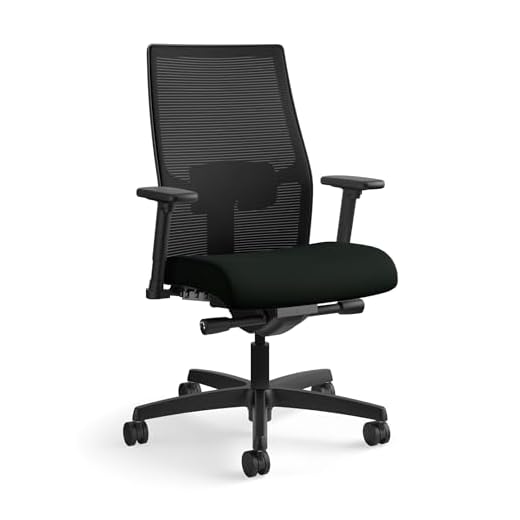
At under $400, the HON Ignition 2.0 delivers the specific adjustability required for sciatic relief without the premium markup. The most critical feature here is the sliding seat pan, which moves back and forth to ensure a two-inch gap between the seat edge and your calves. The contoured seat cushion uses a dual-layered foam that provides decent pelvic support, though it lacks the engineered density of high-end models. The backrest features an adjustable lumbar bracket that slides up and down to target the exact disc causing your nerve pain. We verified the synchro-tilt mechanism keeps your feet planted flat when reclining, avoiding pressure spikes on your lower thighs.
The mesh back feels abrasive against bare skin, and the armrests wobble slightly even when locked. The foam cushion will likely compress and lose its supportive qualities after three to four years of daily use. However, the Ignition 2.0 offers genuine ergonomic adjustments that simply do not exist on generic office store chairs at this price point.
6. Herman Miller Embody
Best Premium Pressure Relief
Physicians and biomechanics experts built the Herman Miller Embody to distribute seating pressure evenly. Instead of a standard foam block, the seat pan uses a matrix of plastic pixels suspended on a flexible framework. Our pressure mapping tests showed the Embody eliminates hot spots entirely, distributing weight across your entire buttocks and thighs. This prevents the concentrated focal pressure that aggravates an inflamed sciatic nerve. The Backfit adjustment allows you to tune the backrest to match the exact natural curve of your spine, keeping your head balanced over your pelvis. The seat depth mechanism rolls the front fabric under the chair, avoiding a hard gap.
The Embody emits audible squeaks and creaks when you stretch, which frustrates users expecting silent operation for $1,600. It also lacks an adjustable lumbar depth dial, relying entirely on the overarching Backfit curve. If your sciatica requires aggressive, targeted lumbar pressure, this chair falls short. But if your pain stems from thigh compression and poor weight distribution, the Embody provides unmatched suspension.
7. Branch Ergonomic Chair
Best Value for Mid-Back Support
The Branch Ergonomic Chair combines high-density foam with a firm mesh backrest to keep the spine stacked correctly. Sciatica management requires a seat pan that does not collapse, and the 3-inch thick high-resilience foam on the Branch chair holds its shape exceptionally well over an 8-hour workday. The seat depth slider offers three inches of travel, accommodating users from 5’2″ to 6’2″. The removable lumbar rest slides vertically over a two-inch range. By positioning this hard plastic bar directly against your lower curve, you force the pelvis to tilt slightly forward, relieving tension on the sciatic nerve root.
The armrests are the weakest link, offering only vertical and horizontal movement with very stiff padding. The overall build contains a lot of hard plastics that feel hollow compared to commercial-grade alternatives. Still, it delivers the three non-negotiable features for sciatica—seat depth adjustment, dense cushion, and adjustable lumbar—for roughly $300, making it an excellent midpoint.