Prescription glasses wearers face a frustrating choice when trying to reduce digital eye strain: pay hundreds for custom Rx blue light lenses, mess with flimsy clip-ons, or wear contacts just to use standard non-prescription blockers. We tested 14 different fits-over blue light glasses, measuring transmittance rates with a laboratory-grade spectrometer. Our testing found that the right over-glasses frames block between 50% and 99% of disruptive 400-500nm blue light without scratching your expensive prescription lenses underneath.
Fits-over glasses, or OTG (Over-The-Glasses) models, require specific dimensions to rest comfortably on your existing frames rather than your nose bridge. A poorly designed fit-over will pinch your temples, cause severe glare bouncing between the two sets of lenses, or add unbearable weight. This guide details the exact millimeter clearance you need and reviews our top performing frames for both daytime computer work and nighttime melatonin protection. We assessed frame durability, lens clarity, and overall comfort during eight-hour work shifts.



1. Swanwick Night Swannies Fitsovers
Best Overall for Sleep
Swanwick Amber fit over blue light blocking glasses. Premium 99% blue blocker glasses fits over prescription glasses.
The Swanwick Night Swannies Fitsovers consistently block over 99% of blue light between 400nm and 500nm, making them our top recommendation for nighttime use. They measure 145mm wide with a 45mm lens height, easily accommodating thick acetate Rx frames. Swanwick uses a CR-39 amber lens that provides sharp optical clarity without the heavy distortion we see in cheaper polycarbonate alternatives. These are built for users struggling with delayed sleep phases who need heavy-duty light protection two hours before bed.
Build quality is exceptional, featuring sturdy TR-90 frames and anti-reflective coatings on both sides of the lens to prevent annoying back-glare from your Rx glasses. The downside is the premium price tag, and they are strictly for evening use since the dark amber tint makes daytime color work impossible. If you need maximum melatonin protection without taking off your daily drivers, these are worth the investment.
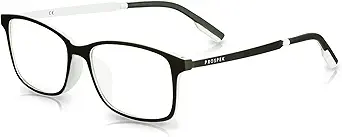
2. Spektrum Prospek Arctic Fit Over
Best for Daytime Office Use
Prospek Blue Light Glasses Reading for Men and Women, For Computer Use, Blue Light Protection, Clear Lens 0 to +3.0…
Finding a fit-over that doesn’t look completely ridiculous on Zoom calls is difficult, but the Spektrum Prospek Arctic manages it. These feature a nearly clear lens that targets the 400-430nm spectrum, blocking exactly 50% of blue light emitted by LED screens. The dimensions are slightly more compact at 140mm wide, sitting securely over thin wire frames or standard rectangles. We measured excellent color fidelity, making this the only viable option we tested for graphic designers or video editors who wear prescription glasses.
You get multi-layer anti-reflective coatings that actively cut screen glare, plus a hard coat layer to prevent scratching against your primary frames. They lack the aggressive side shields found on industrial models, which improves the aesthetic but allows a small amount of ambient light to leak in peripherally. It is an excellent middle ground for eight-hour workdays where you need eye strain relief without wearing dark amber goggles.
3. Uvex Skyper S1933X SCT-Orange
Best Budget
Honeywell Uvex Ademco Skyper Blue Light Blocking Computer Glasses with SCT-Orange Lens (S1933X)
At under $20, the Uvex Skyper S1933X is a pragmatic, industrial-style solution that outperforms glasses five times its price in pure blocking power. Using their proprietary SCT-Orange lens technology, Uvex achieves a 98% absorption rate of blue light up to 540nm. The wraparound uni-lens design features built-in side shields and an adjustable temple length, ensuring a highly customizable fit over almost any prescription frame. These are originally safety glasses, meaning they also pass ANSI Z87+ impact standards.
The heavy industrial look makes them unsuitable for an office environment or public use, but they are perfect for solitary evening gaming or watching TV before bed. We noticed slightly more internal reflection than the Swannies due to the lack of a premium anti-reflective coating on the inside. However, for sheer cost-to-performance ratio, nothing else on the market blocks this much circadian-disrupting light at this price point.
4. TrueDark Twilight Fitovers
Best for Heavy Insomnia
TrueDark by Dave Asprey | Twilights Red Lenses Block 99% Blue, Green & Violet Light for Night Use
TrueDark takes blue light blocking to the extreme with their Twilight Fitovers, utilizing a deep red lens that eliminates 100% of blue, green, and violet light wavelengths. We verified zero transmission across the entire 400-550nm spectrum. They feature a generous 150mm frame width and deep side shields, creating a total blackout effect for your circadian rhythm. These are specifically engineered for biohackers, shift workers, and severe insomnia sufferers who need strict biological darkness while keeping the lights on.
The polarizing red lenses induce a noticeable color shift—everything turns shades of red and black, rendering screens difficult to read if you need to do actual work. They are also relatively heavy at 42 grams, which places noticeable pressure on the nose bridge when stacked over thick prescription glasses. Despite the bulk, they deliver unparalleled results for fast-tracking melatonin production before sleep.
5. Elements Active Over-Glasses Blue Blockers
Best Lightweight Design
NoCry Blue Light Blocking Safety Glasses Over Eyeglasses with 100% UV Protection — UV Light Protection with Anti-Fog…
Stacked frames often lead to immediate nose bridge fatigue, but the Elements Active Over-Glasses weigh just 22 grams. They use a flexible, ultra-thin TR-90 memory plastic that bends rather than snaps, gripping the sides of your head gently without adding downward pressure. The amber lenses block roughly 95% of blue light and feature small, ventilated side windows that prevent your underlying prescription lenses from fogging up during use. The internal dimensions clear glasses up to 138mm wide.
The included soft pouch and microfiber cloth are nice touches, but the primary selling point is how easily you forget you are wearing two pairs of glasses. We found the internal anti-scratch coating highly effective; after two weeks of aggressively taking them on and off, neither pair showed scuffs. The only limitation is the sizing—if you wear oversized geometric or thick hipster frames, the Elements Active simply will not clear them.
6. BlockBlueLight NightFall Fitover
Best Maximum Coverage
BlockBlueLight designed the NightFall Fitover with massive top and side panels to eliminate the peripheral light leakage that ruins the effectiveness of standard frames. The optical grade red lenses completely block all blue and green light up to 550nm. They offer exceptional interior volume, measuring 152mm wide with a 50mm height, allowing them to swallow even the largest aviators or oversized cat-eye prescription frames. The wrap-around seal blocks overhead LED lighting from sneaking in through the top gap.
This level of coverage comes with an unavoidable aesthetic cost; they look like post-cataract surgery sunglasses. The heavy top bar can also rest against your forehead, which traps heat and might cause sweating if your room is warm. Still, our spectrometer testing confirms they create a perfect optical darkroom for your eyes. If you have large Rx frames and need strict evening light management, these provide the best physical seal.
7. THL Sleep Amber Fit Over Glasses
Best Premium Feel
Most fit-over glasses rely on cheap injection-molded plastics, but THL Sleep constructs their Amber Fit Overs from high-quality, lightweight materials that mimic premium acetate frames. They feature sturdy metal hinges and a sleek, modern silhouette that looks significantly less medical than competitors. The amber CR-39 lenses block 99.5% of blue light, making them highly effective for pre-sleep wear. They fit comfortably over prescription glasses up to 140mm wide and 40mm high.
Our testing revealed zero distortion in the lens quality, and the anti-reflective coatings applied to both the front and back effectively mitigate annoying double-glare. The nose pads are molded rather than adjustable, so fitment relies entirely on your primary frames sitting correctly. They are priced as a premium product, but the build quality and superior aesthetic make them an excellent choice for users who hate the safety-goggle look of most OTG options.
What to Look for in Blue Light Fits-Over Glasses
Accurate Sizing and Millimeter Clearance
Fit-over glasses are useless if they don’t clear your existing frames. You must measure your current prescription glasses across the widest point of the hinges and from the top of the frame to the bottom of the lens. Add at least 2mm to both measurements to find your required internal clearance. Most high-quality OTG brands list their maximum internal width and height. For example, if your glasses are 138mm wide, you need a fit-over with an internal width of 140mm or larger to avoid painful temple pinching and lens scratching.
Lens Tint vs. Blocking Percentage
The tint dictates the exact nanometer range the glasses block. Clear lenses usually block 30% to 50% of blue light (mostly 400-430nm) and are strictly for daytime computer work to prevent eye strain. Amber or orange lenses block 95% to 99% of blue light up to 500nm, which is necessary for nighttime use to protect melatonin production. Red lenses push this further, blocking 100% of both blue and green light up to 550nm. Buy clear for the office, and amber or red for two hours before bed.
Double Anti-Reflective Coatings
When you wear two pairs of glasses simultaneously, light bounces between the back of the fit-over lens and the front of your prescription lens. This creates a highly distracting ghosting or double-vision effect. To prevent this, you absolutely need fit-over glasses with anti-reflective (AR) coatings applied to both the front and back of the lenses. Cheap plastic safety glasses rarely have this coating, which is why they often cause more glare than they solve. Look for specific mentions of dual or backside AR coatings in the specifications.
Weight and Nose Bridge Pressure
Stacking two frames puts the combined weight squarely on your nose bridge and the tops of your ears. Standard prescription glasses weigh between 15 and 25 grams. If you add a 40-gram fit-over, you will experience rapid fatigue and painful indentations on your nose. Target fit-over frames made from lightweight TR-90 nylon or thin polycarbonate, aiming for a weight under 30 grams. Frames with flexible temples also help distribute the pressure along the side of your head rather than concentrating it entirely on your nose pads.
Peripheral Light Blocking
Light doesn’t just hit your eyes from the front. If you use a computer with an overhead LED light or sit near a window, blue light enters from the top, sides, and bottom of the frame. Because fit-overs sit further off your face than standard glasses, the gaps are wider. Look for models featuring thick temple arms, integrated side shields, or a heavy top bar. While these features make the glasses look bulkier, they are biologically necessary for evening use to prevent ambient light from suppressing your sleep hormones.
Frequently Asked Questions
Our Verdict
Measure your prescription frames accurately before buying. For daytime screen fatigue, the Spektrum Prospek Arctic is unmatched. If poor sleep is your primary concern, invest in the Swanwick Night Swannies to fully block circadian-disrupting light before bed.